cultural institution of City of Gdansk
The 17th MOZARTIANA International Festival will be held from 21 to 27 August 2022. For years Mozartiana has hosted many celebrated Polish and international artists. This year will also feature delightful concerts at Artus Court, Oliwski Park and Oliwsa Cathedral. Following three chamber concerts at Artus Court (21 – 23 August) performed by such artists as clarinettist Matthias Höfele, soloist and concertmaster of the Deutsche Oper Berlin, and violinist Tomasz Tomaszewski, the founder of the Polish String Quartet Berlin, the Opening Concert with the AMADEUS Polish Radio Chamber Orchestra conducted by Agnieszka Duczmal, will take place on 24 August. The same evening we invite you to a concert by Nando Citarella and his band.
On 25 August, we invite you to the Opera in the Park for a production titled Night Music, directed by Jerzy Bielunas and performed by celebrated Polish and international singers, and the Polish Baltic Philharmonic Orchestra conducted by Massimiliano Caldi. 25 and 26 August will feature Opera To Make Your Head Spin, a theatre production for children directed by Magdalena Małecka-Wippich, with music by Mozart and Maciej Malecki. Cezary Paciorek and his band and Leszek Możdżer will take us on evening trips of Mozart’s themes in jazz arrangements (25 and 28 August).
On 26 August, Sinfonia Varsovia and its concertmaster, celebrated violinist Jakub Haufa, will perform a symphonic concert.
The Festival will conclude with its Final Concert. This 27 August, the walls of Oliwa Cathedral will reverberate with the sound of the music of the Salzburg Master performed by peerless soloists: Roberta Mameli (soprano), James Laing (countertenor), Emilio Pons (tenor), Wojciech Gierlach (bass), Akademie für Alte Musik, and the Festival organiser, the Polish Chamber Choir, all conducted by Jan Łukaszewski, the director and originator of the Gdańsk Mozartiana Festival.
The Mozartiana International Festival is unique for many reasons. Over four days, the composer’s music will be performed in the natural interiors and open-air park spaces from the times of the Classical period.
More details at mozartiana.pl
Mozartiana was inaugurated in Mozart Year 2006. The Festival reaches a wide audience with its diversity. It features not only classical performances of symphonic and chamber pieces and opera music concerts but also jazz, ethnic and folk music concerts inspired by Mozart’s oeuvre.
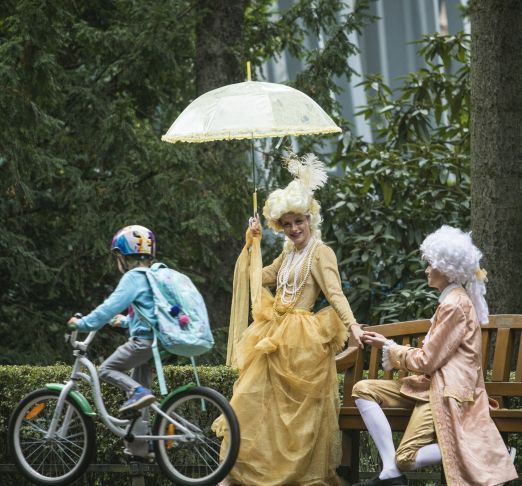
The dates of the Festival coincide with the summer high season, and it is an excellent proposition for the Polish and international tourists who flock to Gdańsk. Today, Mozartiana brings together over 20,000 spectators attracted by its extraordinary views: artistic illumination of the Park’s historical greenery, actors dressed in period clothing walking about and the Dancing Fountain show.
Another important component of the Festival is children’s events that stimulate kids’ imaginations and teach them to listen to classical music.

On the occasion of Gdańsk Days, 23-25 May 2020, we would like to welcome you to listen to the motet Surge, propera by Andreas Hakenberger, an eminent Gdańsk composer from the late Renaissance and early Baroque. The piece’s lyrics come from the Old Testament Song of Songs and begins with the call “Rise up, my beloved, my fair one, and come away.” It was recorded at a concert in Artus’ Court on 16 April 2012, part of the Gdańsk Music Festival.
Artists:
Polski Chór Kameralny
Ensemble Sans Souci
Jan Łukaszewski - conductor

We will soon commence the 26th edition of our Music in the Bower. Guests of the Polish Chamber Choir series of open-air chamber concerts.
This year we have invited artists from Ukraine and the children of Ukrainian refugees who are continuing their musical education at the Art Institute in Gdańsk to participate in eight concerts.
The concerts will take place every Saturday from 25 June to 13 August 2022 at 12:00 noon at the
Bower in Oliwski Park in Gdańsk. Admission Free.
Welcome!
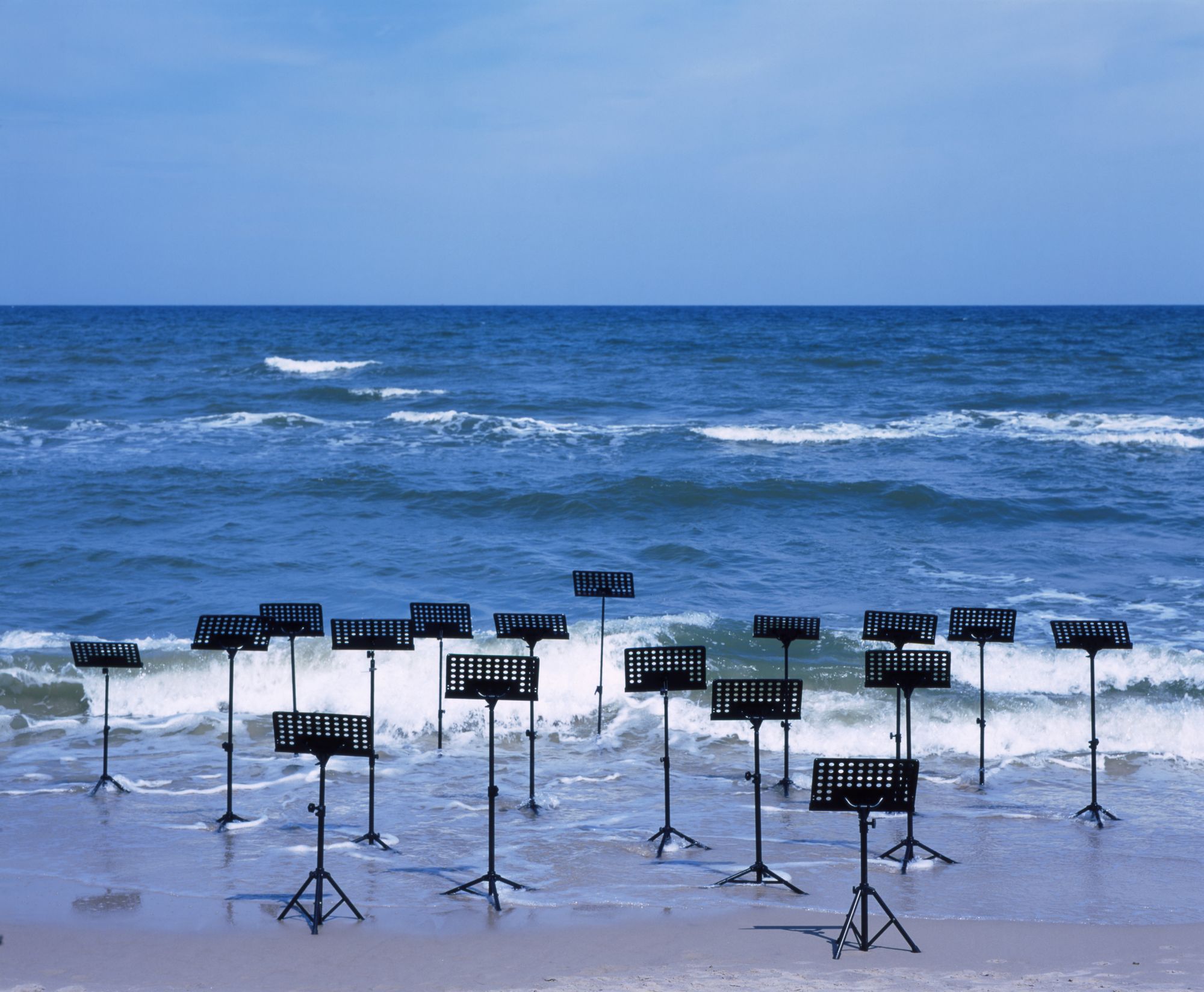
Spring was not meant to be this way – Surely many of us had different plans and intentions that we could not carry out because of the raging pandemic. And though it seems that the situation is getting much better day by day, we cannot forget about the over three hundred thousand deaths (including over a thousand in Poland). We dedicate to their memory a very special performance of the Requiem by John Rutter, recorded on 2 November 2002 at St Nicholas’ Basilica in Gdańsk.
The composition was completed in 1985 and is dedicated by the composer to his father who passed away the previous year. It is largely based on the text of the Latin Mass for the dead, the Requiem, while its second and fourth movements are Rutter’s earlier composition in English: Out of the deep (Psalm 130) and The Lord is my Shepherd (Psalm 23).
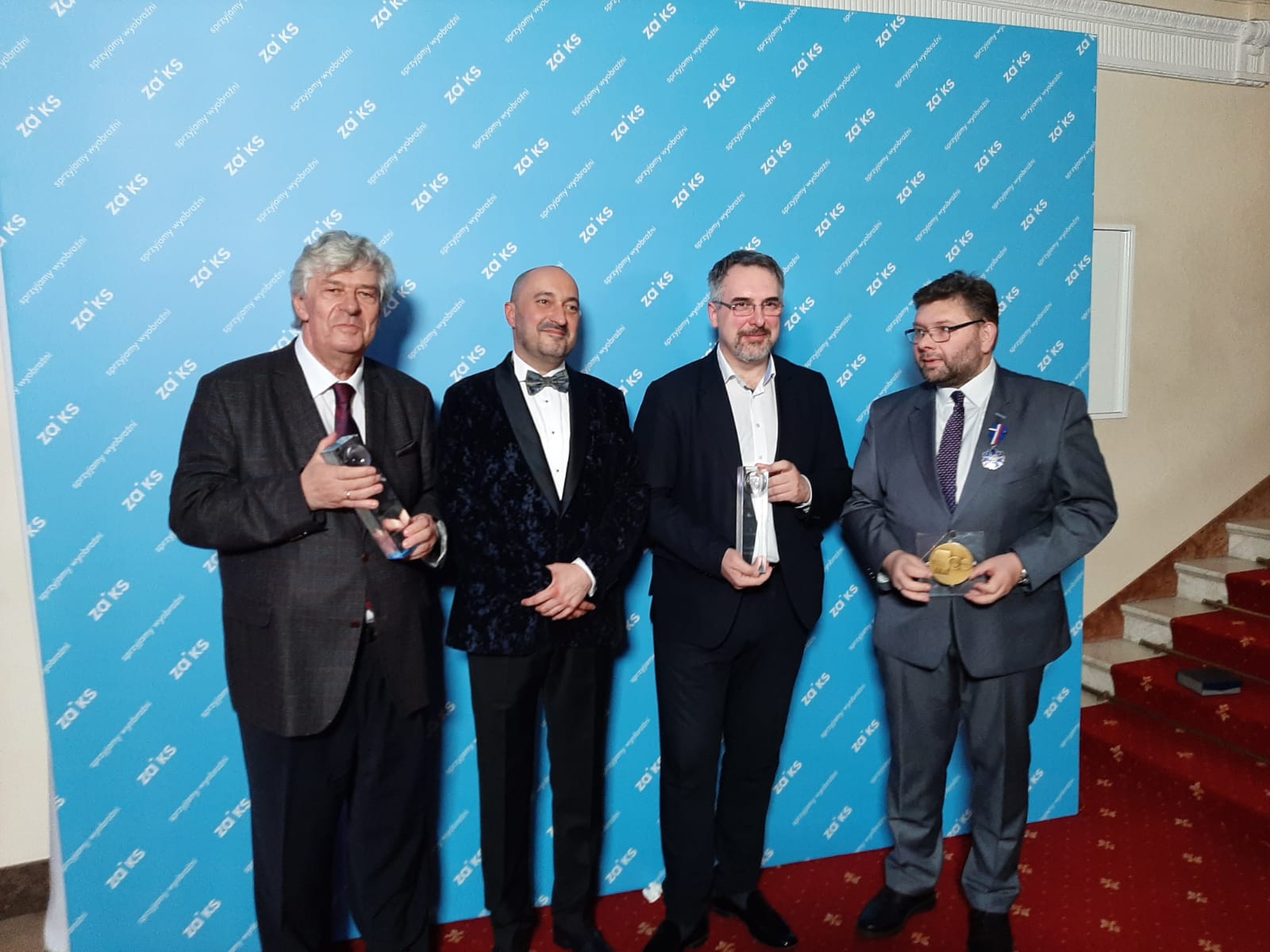
We have the pleasure to inform you that Jan Łukasazewski, the director of the Polish Chamber Choir, is a recipient of the prestigious award for spreading Polish contemporary music from the Management of the ZAiKS Society of Authors.
The distinction was established by the ZAiKS management at the request of the management of its Music Authors’ Section. It is given to those who help to spread Polish contemporary music both by performing it at festivals and in concert, and by writing about it. Festival organisers and concert promoters, conductors and musicians, journalists, musicologists and music theoreticians are all eligible for the award. The award is handed out annually. The first one was presented in 2006
The honour is all the more valuable to us because this was the first time the award had been given to a musician whose art focuses on choral music! Certainly, the impressive number of over 700 premieres boasted by the Polish Chamber Choir conducted by Jana Łukaszewski for 39 years now is not without merit. Most of these pieces are by Polish composers, which is worth emphasising.
In previous years the award for spreading Polish contemporary music was given to such luminaries as Stanisław Moryto, Marian Borkowski, Joanna Wnuk-Nazarowa and Agnieszka Duczmal.
Congratulations to Director Jan Łukaszewski!
Jan Lukaszewski, Miłosz Bembinow, Klaudiusz Baran, Paweł Łukaszewski; 14.06.2022, Warsaw
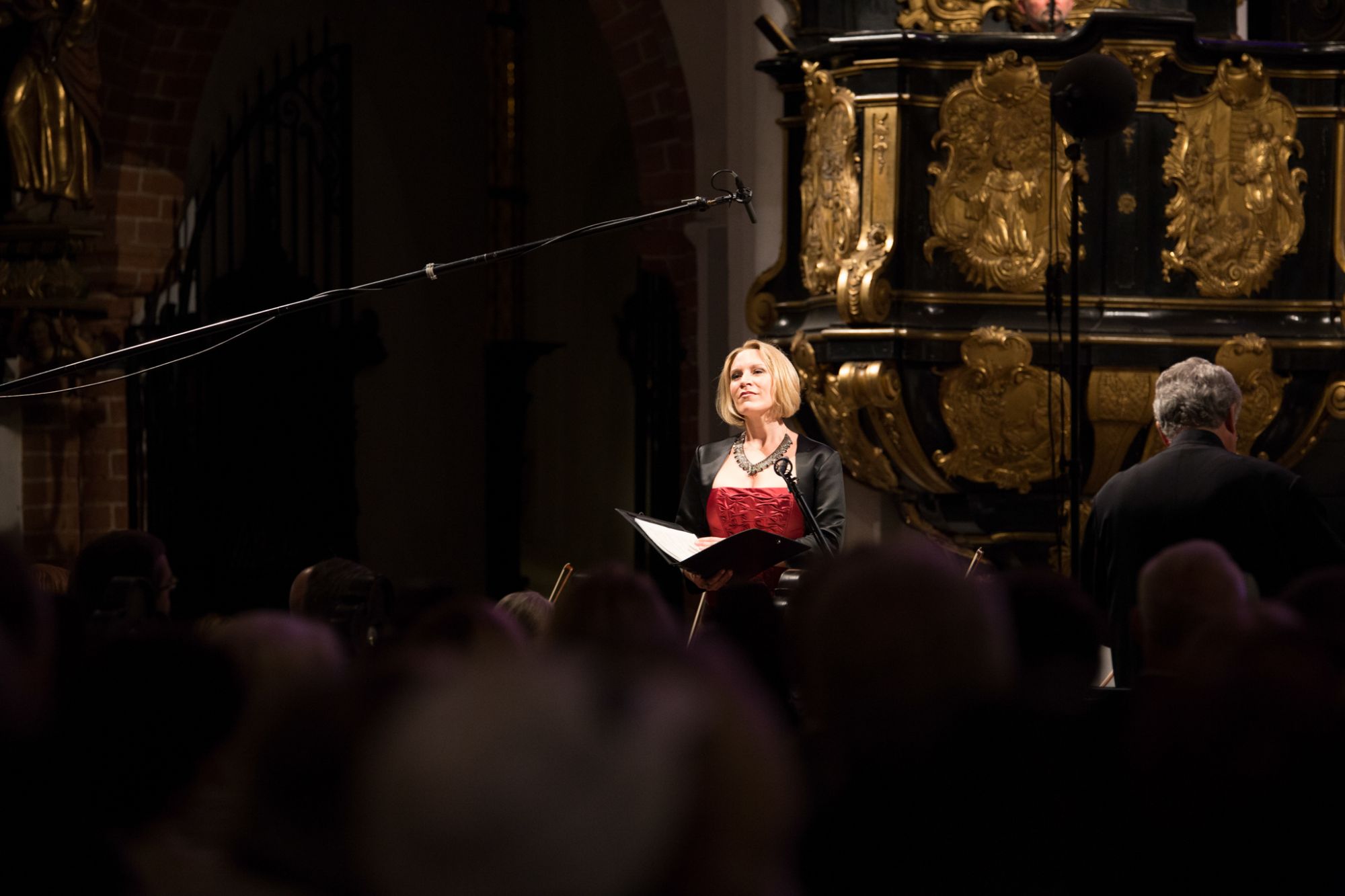
We welcome you to listen to a fragment from the final concert of the 10th Mozartiana International Mozart Festival from 2015 starting on 17 May 2020.
A homage to St John Paul II on the 100th anniversary of his birth.
Programme:
Wolfgang Amadeusz Mozart - Te Deum KV 141/66b oraz Exsultate Jubilate KV 165/158A
Artists:
Carolyn Sampson - soprano
Polski Chór Kameralny
Akademie für Alte Musik Berlin
Jan Łukaszewski - conductor

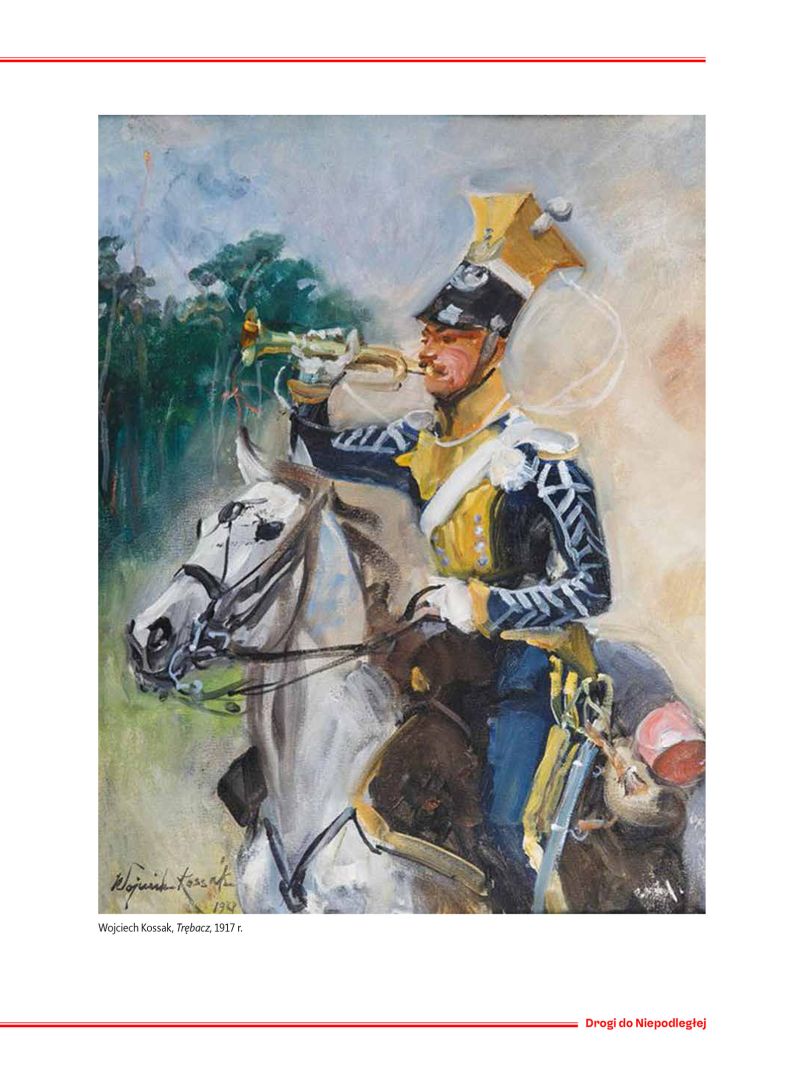
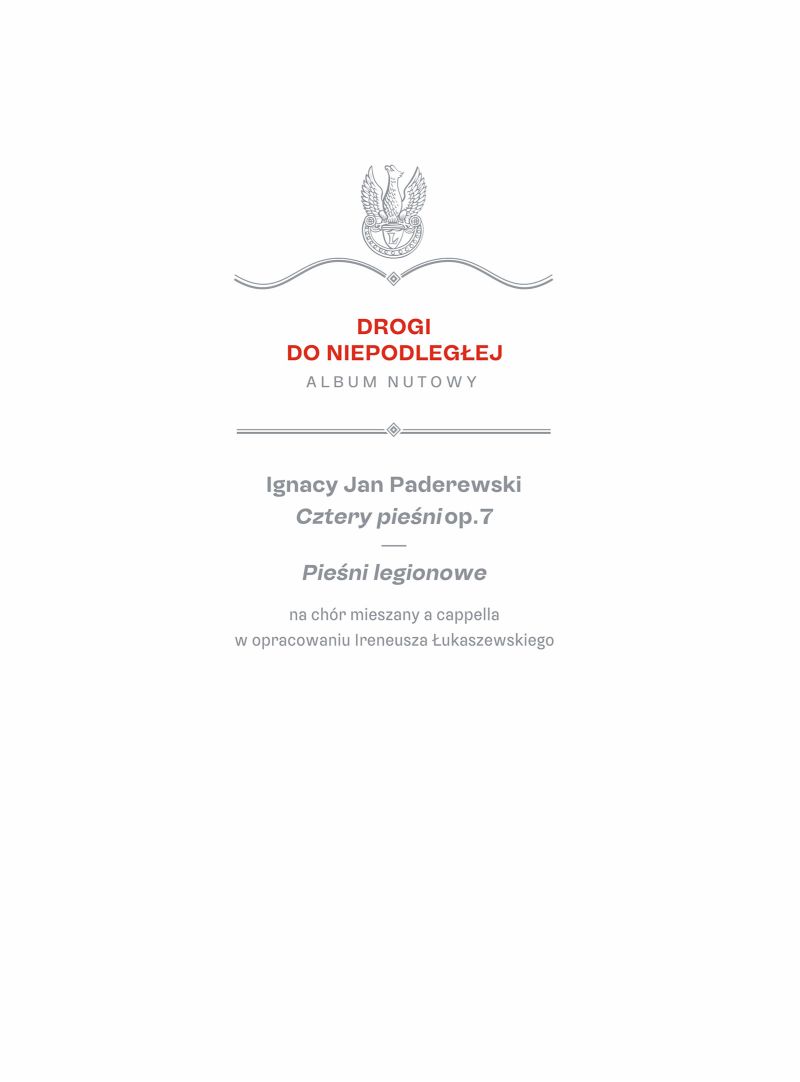
On the initiative of Director Jan Łukaszewski, the Polish Chamber Choir has released "Drogi do Niepodległej" [Roads to Independence], a sheet music book. This fascinating and unique publication, enhanced with photographs and a captivating historical and musicological description, contains 14 songs of the Polish Legions in World War I and four pieces by Ignacy Jan Paderewski arranged for the a cappella choir by Ireneusz Łukaszewski. The book was funded by the Roman Dmowski and Ignacy Jan Paderewski Institute for the Legacy of Polish National Thought as part of the Patriotic Fund, Independence, the Polish Way edition.
The book will be released on 12 May 2022, on the 87th anniversary of Józef Piłsudski’s death.
The book is a record of intriguing arrangements of songs of the Polish Legions in World War I and lieder by Ignacy Jan Paderewski set to lyrics by Adam Asnyk, arranged by Ireneusz Łukaszewski, outstanding choirmaster and composer, which will certainly serve to popularise this unprecedented part of Polish musical culture. This edition aims to generate musical and historical interest in the Republic of Poland’s road to independence, full of fascinating and heroic stories of the Polish legionnaires and model patriotic attitudes.
Besides sheet music, the "Drogi do Niepodległej" choir book contains photographs of Polish Legions in World War I and reproductions of drawings by Artur Grottger. It is published in a masterful visual setting (196 pages in B4 format) by Gdańsk painter and designer Dominika Gzowska.
The book is intended for all those who are interested in choir singing. Through the unique artistry of the pieces in the book and the moderate level of performance difficulty, it can be a source of inspiration for choirmasters and groups, amateur, professional and school-based alike. "Drogi do Niepodległej" [Roads to Independence] will be made available to libraries, schools, music institutions and museums free of charge to hopefully enrich the repertoire of many a concert.

Funded by the Roman Dmowski and Ignacy Jan Paderewski Institute for the Legacy of Polish National Thought under the Patriotic Fund, Independence in Polish edition
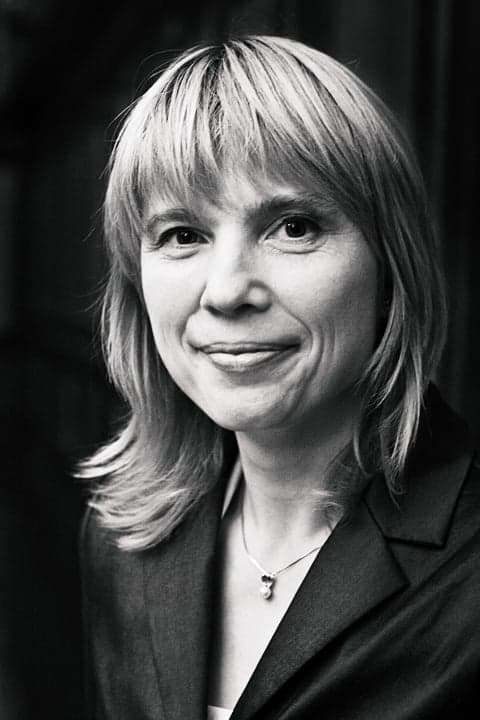
We are sorry to announce that Alicja Jokiel has passed away on 29 April 2020.
Ms Jokiel was the Polish Chamber Choir’s Promotion Specialist from 1 August 2012 until 31 July 2013.
Her survivors include five sons.
The funeral mass for the late Alicja Jokiel will be held on Thursday, 7 May at 10:30 w at the Our Lady of Fatima Shrine (Sanktuarium Matki Bożej Fatimskiej) in Gdańsk-Żabianka; the funeral ceremony will take place directly after mass at 13:30 at Srebrzysko Cemetery.
Eternal rest grant unto her, O Lord, and let perpetual light shine upon her.
On 16 May 2022, at 14:00 a debate will be held at the Department of the Theory of Music on: Andrzej Koszewski, the Consummate Master, with Jan Łukaszewski, Maria Koszewska-Wajdzik and Iwona Fokt at the Ignacy Jan Paderewski Academy of Music in Poznań.
Moderator: Mikołaj Rykowski
Monday, 16 May 2022r, 14:00 hrs
Sala Prezydencka (President Room), Ignacy Jan Paderewski Academy of Music in Poznań
Admission Free
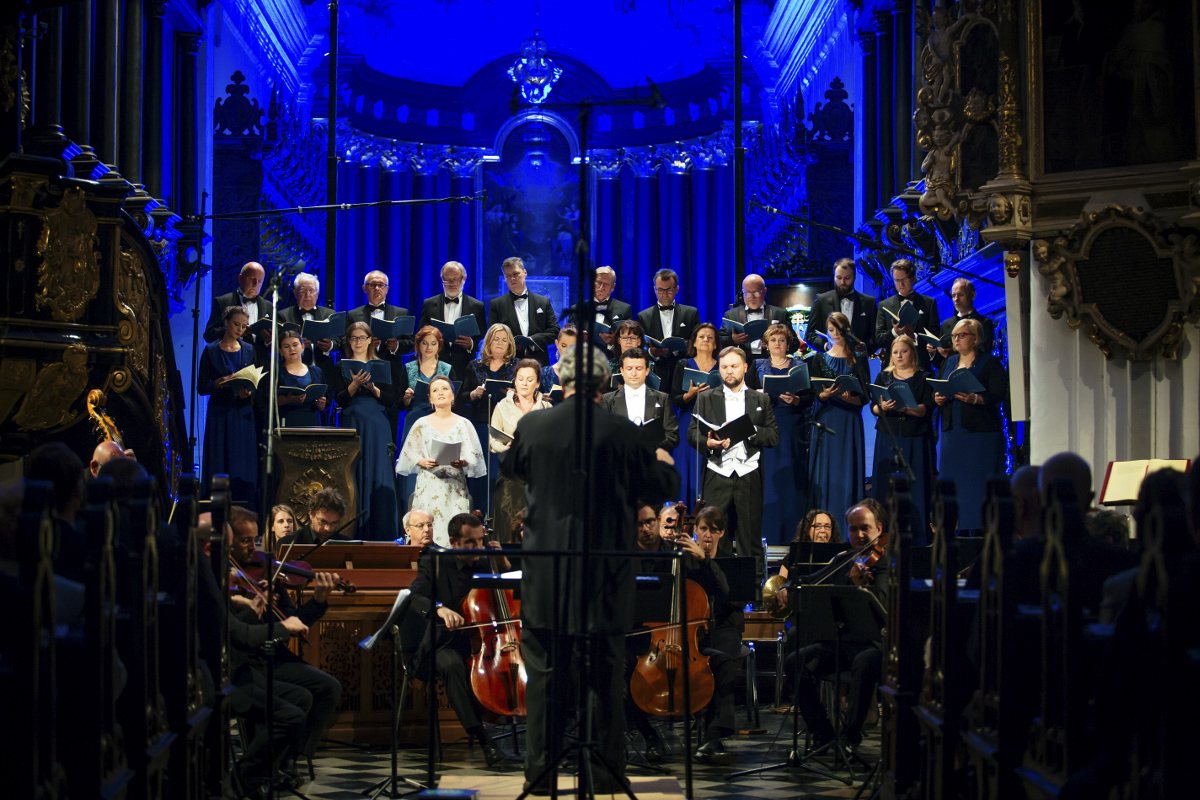
We invite you to listen to a fragment of the final concert of the 13th International Mozartiana Festival 2018
“He raiseth up the poor out of the dust, and lifteth the needy out of the dunghill; That he may set him with princes, even with the princes of his people,” sings the choir in Laudate pueri Dominum.
Don’t we need such hope right now?
Programme:
Wolfgang Amadeusz Mozart -Vesperae solennes de confessore KV 339
Performed by:
Julia Lezhneva – soprano
Ewa Marciniec – alto
Krystian Krzeszowiak – tenor
Wojtek Gierlach – basso
Polski Chór Kameralny
Wenecka Orkiestra Barokowa
Jan Łukaszewski – conductor
Recording produced by: Andrzej Solczak /Program 2 Polskiego Radia
Photos: Renata Dąbrowska
Film editor: 2Pi Group
We do not know what occasion these two vespers cycles were written for. The later one, dated at 1780, includes the term solennes in its title, which emphasises the music’s ceremonial nature. The music is radiant with an orchestra that includes three trombones, two timpani and two trumpets (though without woodwinds). The word confessore indicates that the vespers were dedicated to a patron saint who was a confessor, or follower, venerated because of his holy life, rather than because of dying for his faith in Christ like the martyrs did.
The piece we would like to present to you is a tour-de-force of compositional ingenuity. The individual movements are in different keys, scored for different performers and in different styles. The instrumentation also changes. The sumptuousness of the sound rouses the listener in the choral interludes, with spectacular coloraturas and charming lyricism in the solos. At times, the Dixit that begins the Vesperae in ¾ time sounds almost like a dance, the concluding Magnificat is not unlike an opera finale. The Vespers fifth psalm, i.e. Laudate Dominum, sung by a soprano and choir, would go on to become one of the best known pieces of sacred music (and the combination of a female soloist’s voice with the soft sound of a choir was a trademark of 19th-cenury bel canto).
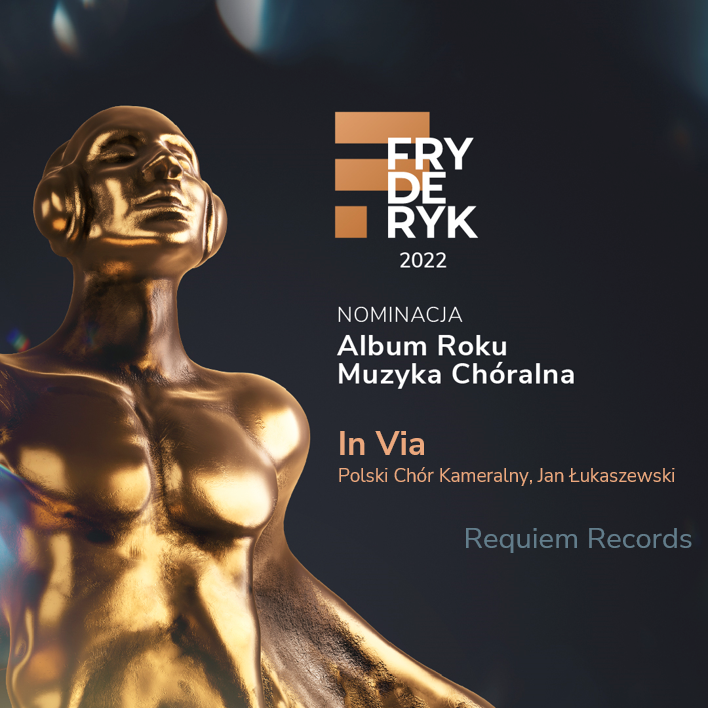
A Fryderyk Award nomination is an exceptional honour that has been bestowed upon us twice this year!
We are proud to announce that In Via, a double album by the Polish Chamber Choir (Label: Requiem Records), has been nominated for Poland’s most prestigious music award in two categories:
Choir Music Album of the Year and
Most Outstanding Recording of Polish Music!
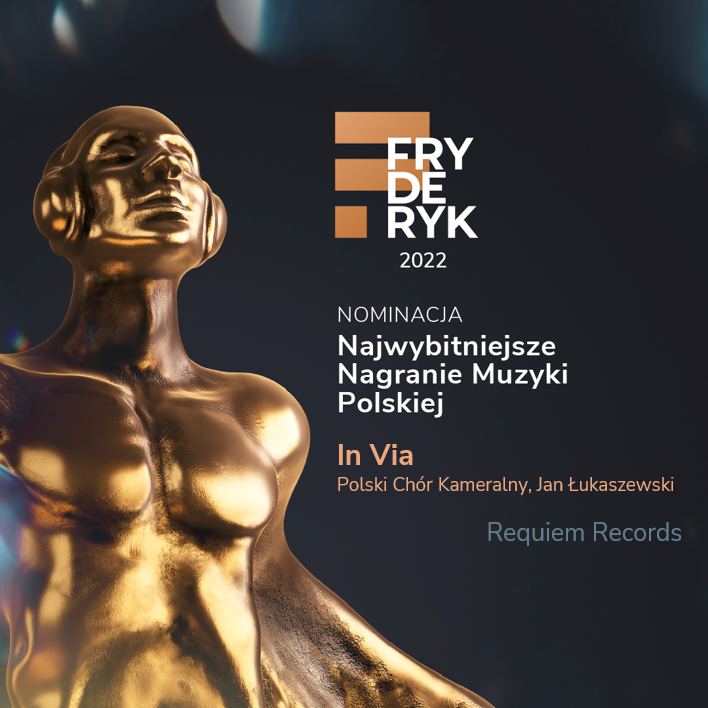
In Via is sacred music worthy of the 21st century. The album contains the best of the Musica Sacra Nova International Composers Competition over a ten-year span from 2010 to 2020. Among the over dozen composers is Michał Malec, whose compositions we heard at last year’s New Sacred Music Laboratory concert.
Please also visit our YouTube channel, where you can listen to fragments of the album
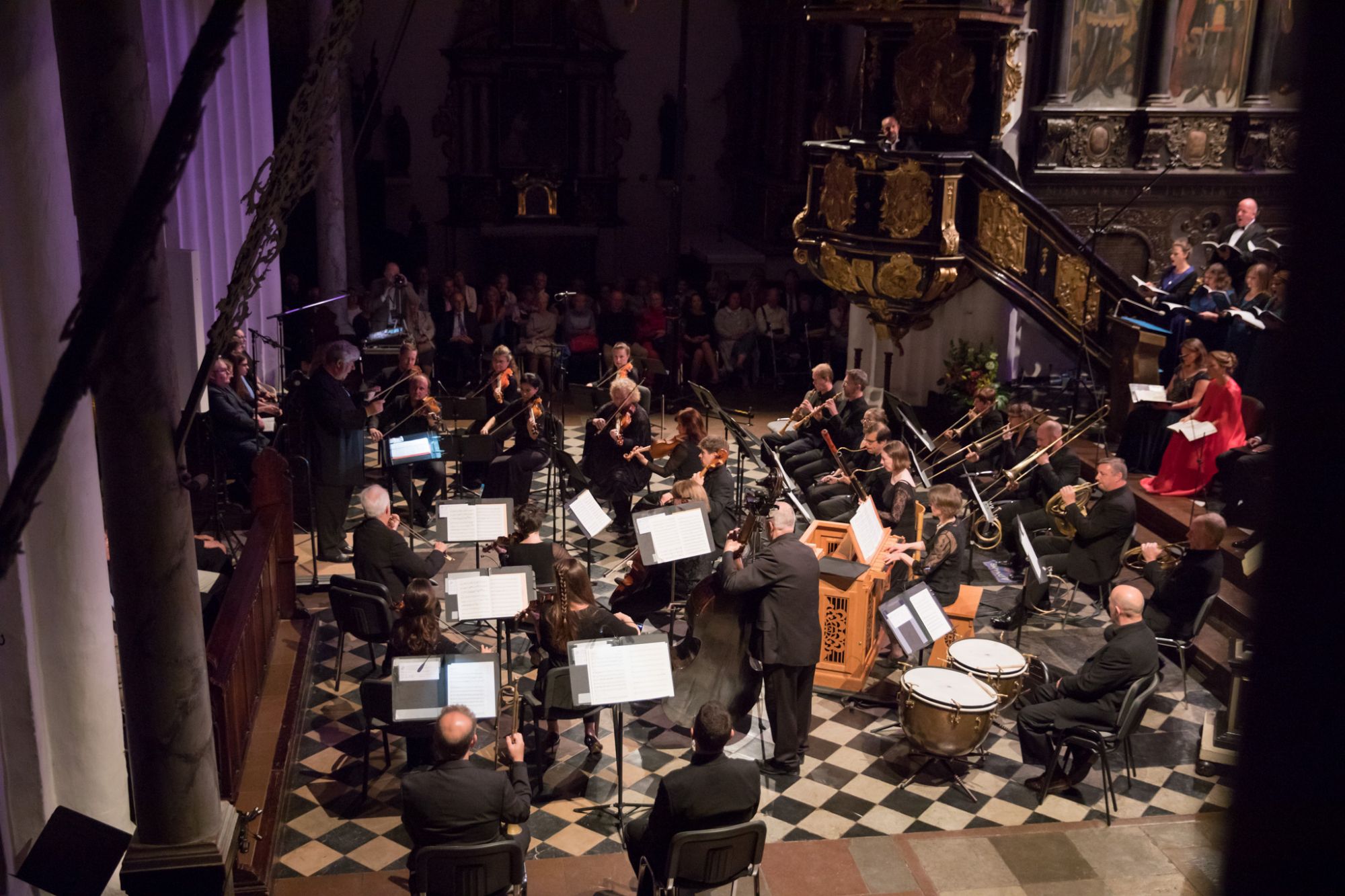
We invite you to listen to a fragment from the final concert of the 12th International Mozartiana Festival 2017.
The jury of the 18th International Composers Competition, Musica Sacra Nova 2022, met in Internet at March 18th. In total, 43 compositions were submitted from the following 19 countries: Austria, Canada, France, Germany, Hong Kong, Hungary, Italy, Korea, Lithuania, Philippines, Poland, Portugal, Republic of South Africa, Switzerland, Turkey, Ukraine, United Kingdom, USA, Vietnam.
The Jury comprised:
Pawel Łukaszewski, President (Poland)
Andrea Angelini (Italy)
Vaclovas Augustinas (Lithuania)
Vincenzo de Gregorio (Vatican)
Jan Łukaszewski (Poland)
Enjott Schneider (Germany)
The following awards were made:
Category A
1st Prize: Paweł Konkol (Poland) for Dominus dixit ad me 2500 €, performance and recording during musica sacra nova - International Festival of Sacred Music in Brauweiler (Germany) and other performance in Vilnius (Lithuania) by Jauna Muzika Vilnius Municipal Choir under direction of Vaclovas Augustinas.
Paweł Konkol - born in 2000 in Rzeszów, composer and arranger. He has been studied composition at The Chopin University of Music in Warsaw since 2019. His main interests are jazz and orchestral music (symphony orchestras, big bands). In addition, he is interested in choral, organ and folk music.
2nd Prize ex aequo: Lukas Butkus (Lithuania) for Eia Mater 2000 €, performance and recording during musica sacra nova - International Festival of Sacred Music in Brauweiler (Germany) and other performance in Vilnius (Lithuania) by Jauna Muzika Vilnius Municipal Choir under direction of Vaclovas Augustinas.
Lukas Butkus (b. 2000) is a young composer from Lithuania where he is studying for his Bachelor’s degree in composition at the Lithuanian Academy of Music and Theatre. Graduate of Marijampolė St. Cecilija’s Gymnasium where his passion for the arts began. Already, Lukas has won some recognition nationwide by coming first place in the “Vox Juventutis 2020” (Vilnius, Lithuania) competition for young composers with his piece “They all return” for mixed choir; also, in 2020, he was one of the five finalists of the national Liturgical music composition competition for acapella choir with his Mass setting. Participant of many musical competitions and festivals as a composer and pianist, in 2021 he was awarded the prestigious Mikalojus Konstantinas Čiurlionis scholarship and the Zita Bružaitė stipend for his creative endeavours. He is the pianist and coordinator of a young contemporary music ensemble “Artisans”, based in Vilnius. Also, a published writer of prose and poetry.
2nd Prize ex aequo: Jakub Szafrański (Poland) for In te Domine speravi 2000 €, performance and recording during musica sacra nova - International Festival of Sacred Music in Brauweiler (Germany) and other performance in Vilnius (Lithuania) by Jauna Muzika Vilnius Municipal Choir under direction of Vaclovas Augustinas.
Jakub Szafrański was born in 1988 in Warsaw. He graduated Grażyna Bacewicz primary and secondary school in Warsaw. He receive bachelor’s degree at Fryderyk Chopin Music University in Trumpet, class of Wiesław Woźnicki and Music band leading, class of Agata Góreczna-Jakubczak. At the same university he receive master degree in Choral Conducting, class of prof. Ryszard Zimak and in Composition, class of prof. Paweł Łukaszewski (diplomas with distinction). In 2012 he founded Male Vocal Band Foyer. In 2013 he reconstructed Missa pro defenctis wrote by J.A. Maklakiewcz and conducted it first time after II world war. In 2015 he founded Artistic and Science Club of Choral Conducting at Fryderyk Chopin University of Music. Same year in march he started working with Warsaw School of Economics Choir as a second conductor. Female choir over his direction won I prize at the International Choral Competition “Cantu Gaudeamus” (2016) and II prize at the International May Choir Competition Prof. Georgi Dimitrov – Varna (2017). In 2016 he started work as a composer and second conductor with Archcatedral Male Choir Cantores Minores in Warsaw. He is finalist of many composing competition: I prize in 57. Tadeusz Baird Competition of Young Composers (2016), II prize in International Young Composer Competition “Vox Juventutis ’17, II prize in International Composer Competition “Musica Caelestis” (2017), III prize in 3th Polish Composer Competition Opus 966 (2015), distinction in 2ed (2014) and 4th (2016) Polish Composer Competition Opus 966, special prize „German premiere” founded by Kammerchor Hannover (2015). He
3rd Prize: not awarded
Category B
not awarded
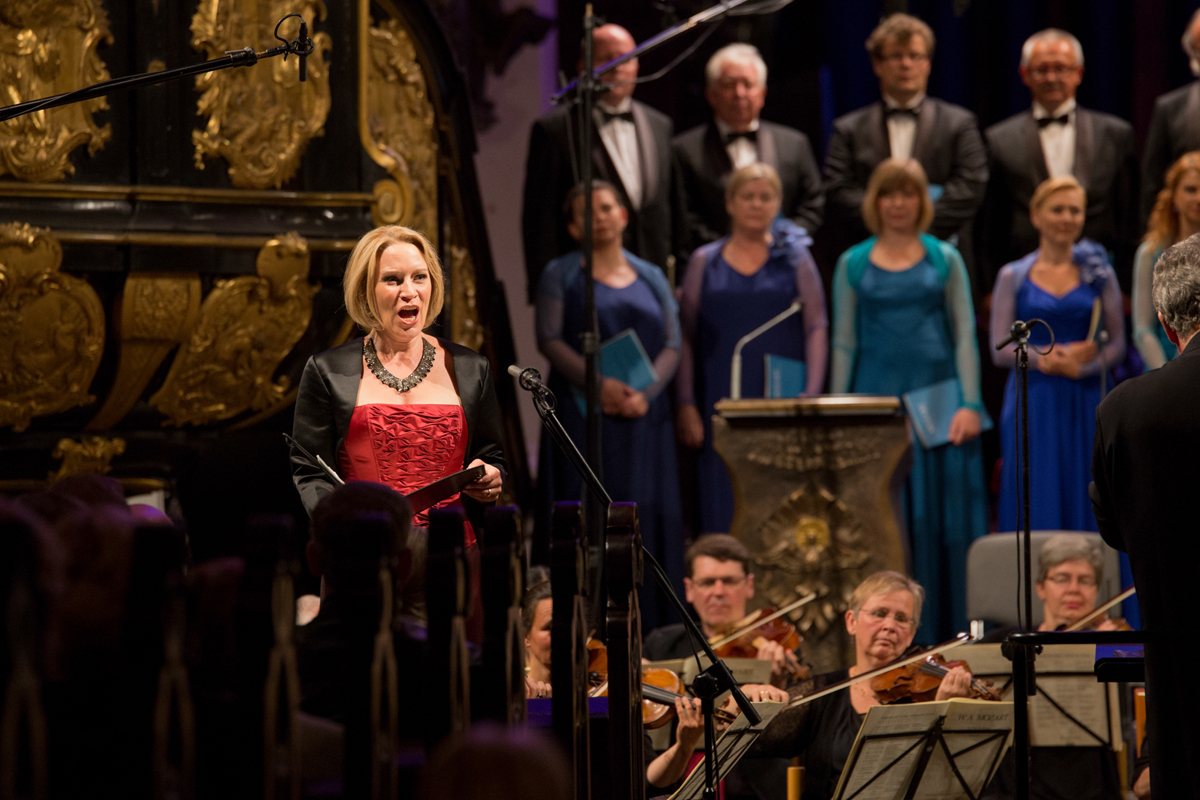
We invite you to listen to a fragment of the 10th International Mozartiana Festival 2015 final concert.
Programme:
Wolfgang Amadeusz Mozart - Regina Coeli B-dur KV 127
Performed by:
Carolyn Sampson, soprano - soprano
Polski Chór Kameralny
Akademie für Alte Musik Berlin
Jan Łukaszewski - conductor
Andrzej Solczak - recording produced by
2Pi Group - film editor
“Regina Coeli” was written in Salzburg in 1772 as the second of Mozart’s three settings of the prayer to the Queen of Heaven, sung during services in the Easter season (author unknown, although sometimes attributed to Pope Gregory the Great). The earlier Mass (KV 108, written in 1771) was performed at the Mozartiana 2013 final concert; the late one (KV 276, written in 1779) in 2014.
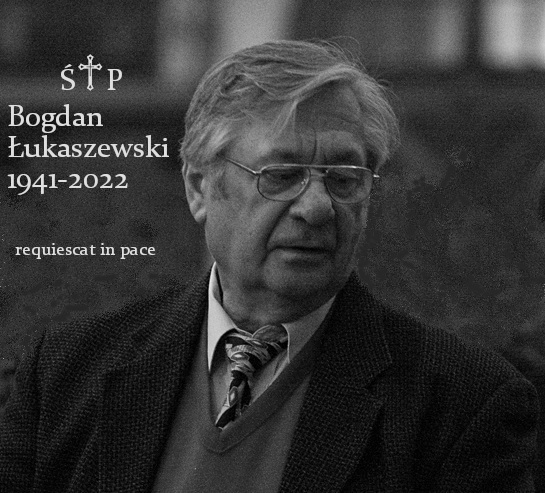
We regret to inform you that Mr Bogdan Łukaszewski, a long-time associate of the Polish Chamber Choir, cofounder of the Pueri Cantores Olivenses Boy’s and Men’s Choir and the brother of our director Jan Łukaszewski passed away on10 February 2022. Actively involved in the life of the Gdańsk music scene, Bogdan Łukaszewski was a member of a number of choirs, including as a full-time singer of the Gdańsk’s Baltic Opera Choir for many years.
We want to express our sincerest condolences to Director Jan Łukaszewski, their family and friends. Funeral arrangements will be announced soon.
The singers and the administrative staff of the Polish Chamber Choir
Honour to his memory!
On 3 May 2019 we had the honour to play at the concert that accompanied the “Music of the Soul liturgical music festival at St John’s Church in Gdańsk, organized by the muzykaliturgiczna.pl Society under the auspices of the Gdańsk Dominican Order.
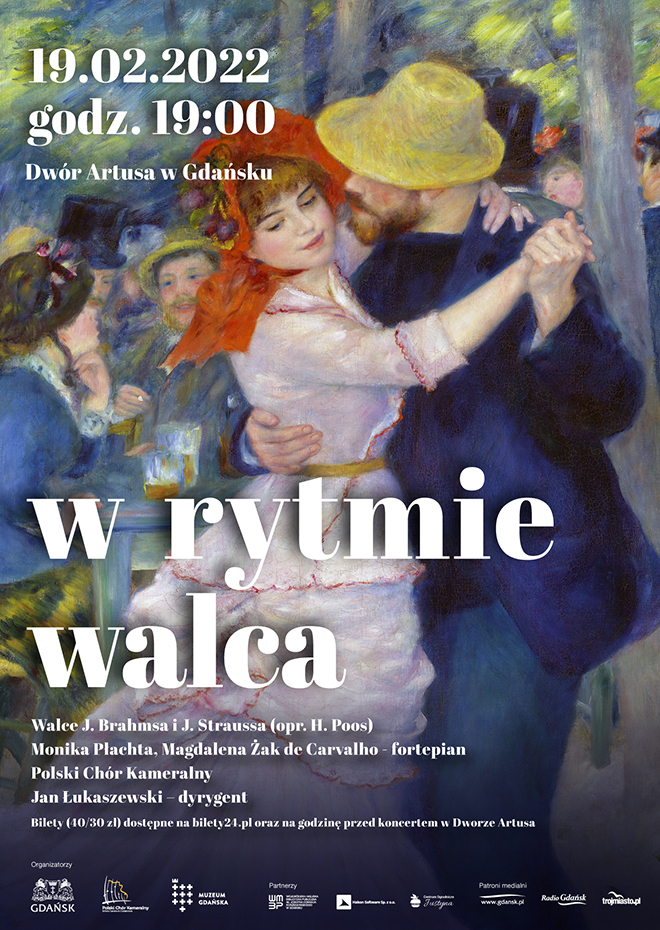
The music of Brahms does not shake you, does not force you to wonder about the meaning of life,
it does not humiliate you with its magnitude or wisdom.
It calms you, sometimes draws a tear, but it’s a happy tear.
If it is true that music can make a man better,
then certainly Brahms’ music does it best.
Ludwik Erhardt: Brahms
The wonderful New Year’s Day concerts in the Vienna Philharmonic Hall have been a must for music lovers all around the world for years. This year, the most beautiful waltzes will also be performed by the Polish Chamber Choir on 19 February at Gdańsk’s Artus Court.
Everyone associates the waltz with Vienna and large orchestras, perhaps also with masterpieces by Fryderyk Chopin. In fact, this elegant dance has its roots in the folk music of southern Germany and may be played not only in instrumental versions. The Saturday concert will take us to the elegant salons of the 19th century.
The concert will begin with 18 short pieces by Johannes Brahms jointly titled the Liebeslieder Waltzes. Their lyrics are poems by Georg Friedrich Daumer from his Polydora collection. Influenced by Schubert’s Ländler, the composer wrote his waltzes inspired by his feelings for Klara Schumann. Their relationship: difficult, stormy, unfulfilled, is reflected in melodies full of all kinds of moods. The composer’s love dilemmas are perfectly illustrated by one of the lyrics by Daumer he used: “Oh women, what bliss you bring! I would have become a monk long ago if it were not for women!” (O die Frauen).
The second part of the concert will feature three absolute hits by Johann Strauss the Younger, known as the Waltz King not without reason. Strauss’s melodies were an inherent feature at the salons of Viennese high society in the 19th century and remain popular to this day. Vienna Blood, Voices of Spring and The Blue Danube were originally written for orchestra. In 2002, they were arranged by distinguished German composer Heinrich Poos for choir and piano for four hands, specially commissioned by Jan Łukaszewski. Heinrich Poos’ collaboration with the Polish Chamber Choir was very special and had already spanned thirty years, during which the ensemble not only performed his works in Poland and throughout the world but also sang the world premieres of his many compositions.
The Polish Chamber Choir will be accompanied by pianists Monika Płachta and Magdalena Żak de Carvalho, artists who play many concerts and are educators at the Academy of Music in Kraków. They have played in Gdańsk before, in 2018, when they performed Johannes Brahms’ Ein Deutsches Requiem together with the Polish Chamber Choir.
Brahms wrote: “I must admit that this was the first time I smiled at the sight of my piece in print! You can call me an ass if those Liebeslieder of ours won’t bring pleasure to a couple of people.”
We hope that those people will be you.
tickets available at bilety24

We invite you to view the Lenten Lamentations Passion Play at Parade Square (Plac Defilad) in Warsaw on 2 April 2007 on the tercentennial of when the passion play was first held.
Performed by:
Olga Ksewicz
Bogusława Kudasik
Dorota Miśkiewicz
Kinga Preis
Dorota Segda
Danuta Stenka
Krzysztof Globisz
Andrzej Grabowski
Paweł Kukiz
Kamil Mokrzycki
Jan Peszek
Mieczysław Szcześniak
Robert Więckiewicz
Katarzyna Brzozowska
Agata Harz
Polski Chór Kameralny, music director Jan Łukaszewski
Chór Pokolenia JP II, artistic director Zofia Sokołowska
Zespół Folklorystyczny ,,Pogranicze” z Szczypliszek
Orkiestra Akademii Beethovenowskiej, artistic director Marcina Klejdysz
instrumentalists:
Dariusz Bafeltowski - guitar
Andrzej Klos - piano
Łukasz Moskal - percussion
Mateusz Pospieszalski - vocal, saxophone, clarinet
Piotr Żyżelewicz - percussion
conductors:
Marcin Pospieszalski
Jan Łukaszewski
Studenci SWST Wrocław
script:
Jerzy Bieluna
Halina Bisztyga - Przebinda
Jan Pospieszalski
direction:
Jerzy Bielunas
Halina Bisztyga - Przebinda
Jan Pospieszalski
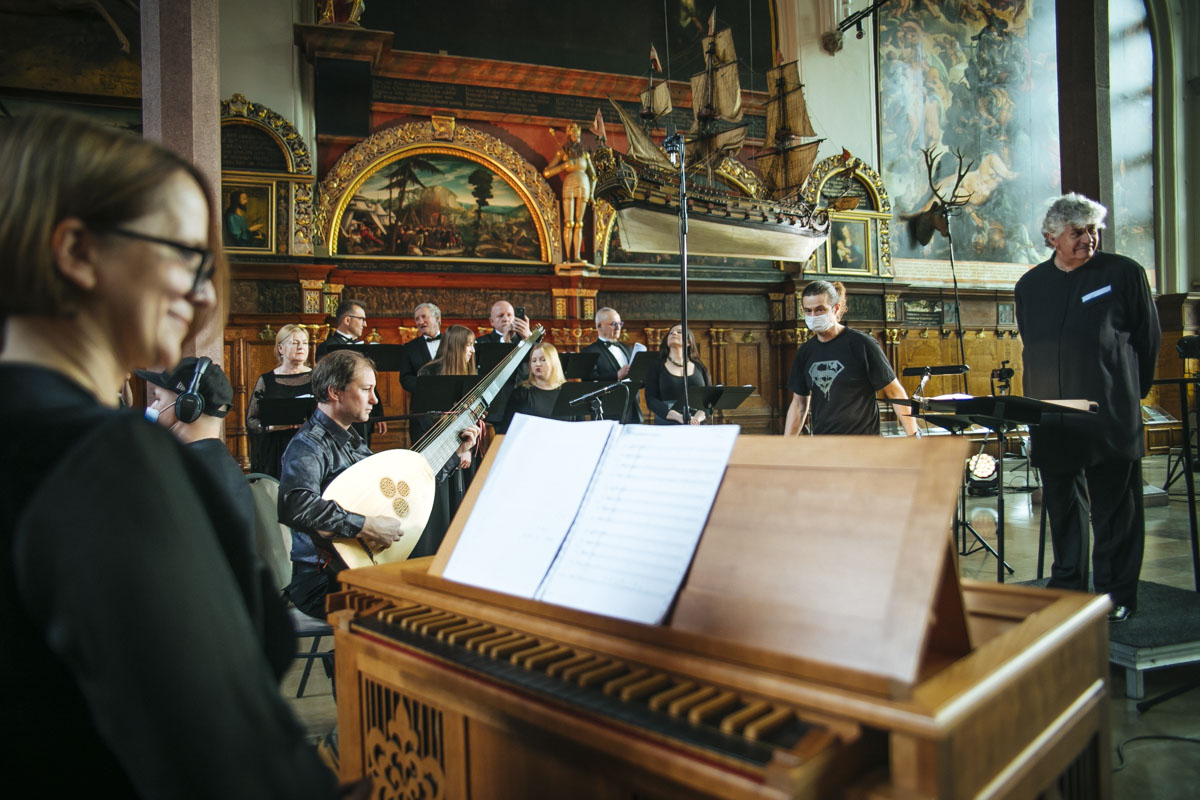
Live broadcast of the concert from the Dwór Artusa in Gdańsk is available (free of charge) at www.nck.pl , www.gdansk.pl, www.polskichorkameralny.pl, on April 24, 2021 (Saturday) at 6.00 pm.
Performers:
Polski Chór Kameralny / Polish Chamber Choir
Jan Čižmář (Czech Republic) - theorbo
Witosława Frankowska – positive organ
Jan Łukaszewski - conductor
Zuzanna Bodak - child
Tomasz Podsiadły - direction
Barbara Przybyszewska-Jarmińska (Professor, Institute of Arts, Polish Academy of Sciences) - narration
Programme:
Jerzy Liban - Ortus de Polonia
Wacław from Szamotuły - Ego sum pastor bonus
Wacław from Szamotułu - Nunc scio vere
Mikołaj Zieleński - Motetto de S. Adalberto: Per merita Sancti Adalberti
Mikołaj Zieleński - Motetto de S. Stanislao: Ortus de Polonia
Andrzej Hakenberger - Veni Sancte Spiritus (the composer spent the last 20 years of his life in Gdańsk, serving as maestro di cappella at the Church of the Holy Virgin Mary)
secunda pars: O lux beatissima
Luca Marenzio - Missa super Iniquos odio habui
KYRIE
GLORIA
CREDO
SANCTUS
BENEDICTUS
AGNUS DEI
Asprilio Pacelli - Tu es pastor ovium
Asprilio Pacelli - Dum esset rex
The reign of the Jagiellonian dynasty in Poland (late 14th cent. – end of 16th cent. ) saw great economic growth and a flourishing of many areas of cultural life. Thanks to the generous support of the arts by the country’s rulers, the noble humanistic ideas gained ground among broad sections of society. The royal court boasted musical standards of the highest European level, and the musical tastes of the royalty were adopted by the wealthiest magnates, who ran their own ensembles. As a result, several Polish cities, notably Kraków, Warsaw and Gdańsk, became major centres of European culture.
The programme of the concert by Polski Chór Kameralny, co-organised with the National Centre for Culture and with assistance from the Institute of Arts of the Polish Academy of Sciences, features works by some of the most outstanding Polish composers, such as Jerzy Liban from Legnica, Mikołaj Zieleński, as well as members of the royal chapel. One of them is Andrzej Hakenberger, who elevated the polychoral technique in his music to the level of perfection.
The repertoire of the concert also includes compositions by Italian masters of late Renaissance and early Baroque who were active in the musical circles of the court of King Sigismund III Waza. Thanks to the king’s efforts, the Warsaw court attracted some of the greatest composers of the time, whose names are mentioned alongside Palestrina, Venosa and di Lasso. Pride of place goes to Asprilio Pacelli, who worked as maestro di cappella in Warsaw between 1602 and 1623. Several of his 26 motets will have their first performance in over 400 years! The first performance after four centuries of Missa super Iniquos odio habui is another highlight of the concert. A full score of the work has come to light very recently in Poland. It was written by Luca Marenzio, who from 1595 to 1597 served as conductor at the court of Sigismund III Waza, and who in 1596 conducted the work’s premiere on the occasion of the visit to Warsaw by a papal nuncio.
Polski Chór Kameralny, conducted by its artistic director Jan Łukaszewski, one of the leading personalities in European choral music, is joined by two prominent musicians specializing in period instruments: Jan Cizmar – theorbo, and Witosława Frankowska – positive organ.
Barbara Przybyszewska-Jarmińska, an eminent musicologist, a Professor at the Institute of Arts, Polish Academy of Sciences, will introduce listeners into the fascinating world of the Jagiellonian period in Polish history.

We invite you to listen to a number of pieces traditionally performed during the Easter Triduum.
Giovanni Pierluigi da Palestrina - Stabat Mater
Heinrich Poos - Jesus bleibet meine Freude
tekst i opr. JAN WĘCOWSKI, Stabat Mater opracowanie "XX Preludium c-moll op. 28" Fryderyka Chopina
opr. PAWEŁ ŁUKASZEWSKI (*1968) (sł. S. Szmidt, mel. C. Gabarain) Barka
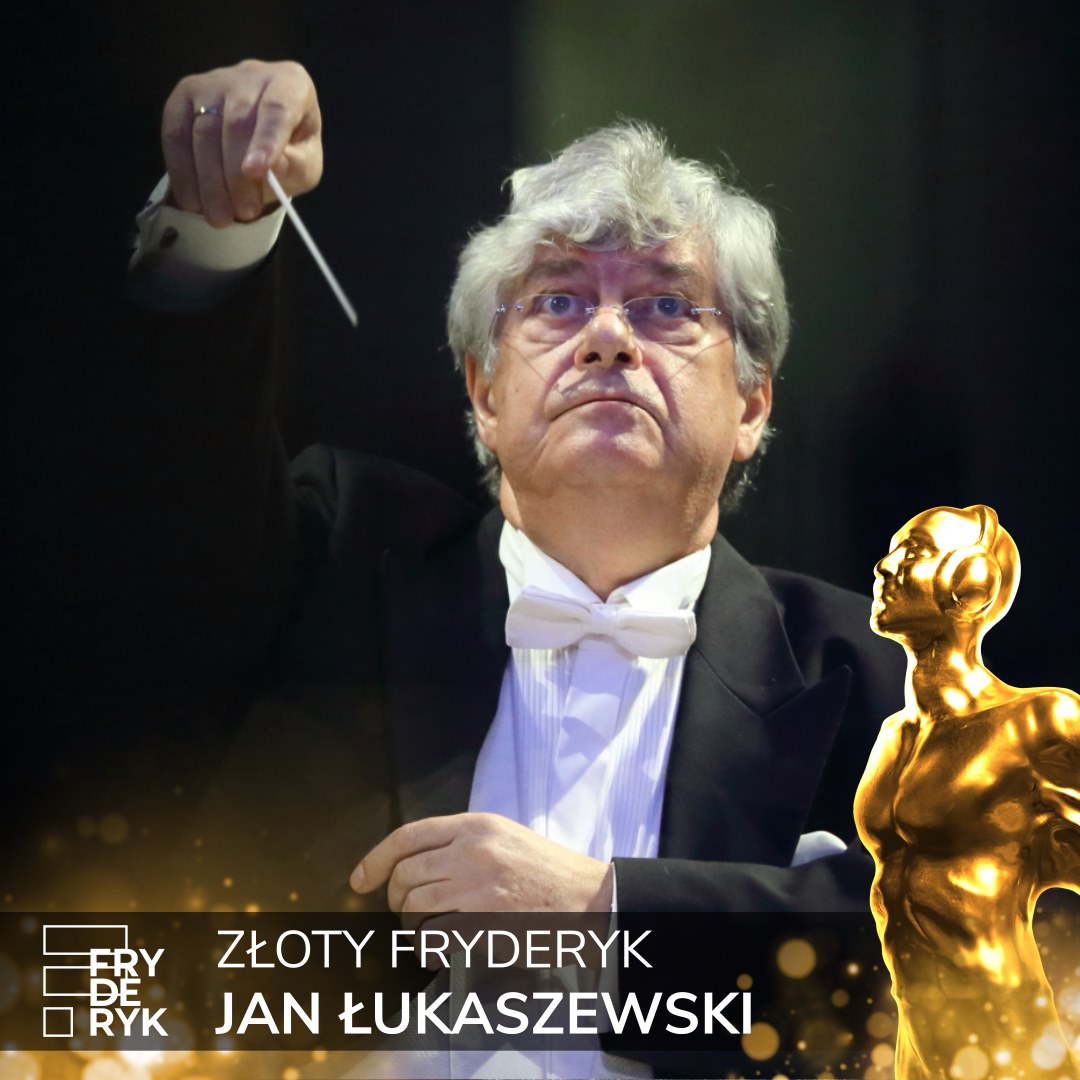
It is with great pleasure that we inform that Jan Łukaszewski, the director of Polski Chór Kameralny, has received the Golden Fryderyk Award of the Polish recording industry for his outstanding artistic achievements. The accolade is all the more noteworthy that it went for the first time to a representative of choral music. Previous recipients of the Golden Fryderyk Award, which was launched in 1999, have included composers Wojciech Kilar, Henryk Mikołaj Górecki, and Krzysztof Penderecki; conductors Jerzy Maksymiuk and Agnieszka Duczmal, opera singer Bernard Ładysz, and pianist Piotr Paleczny.
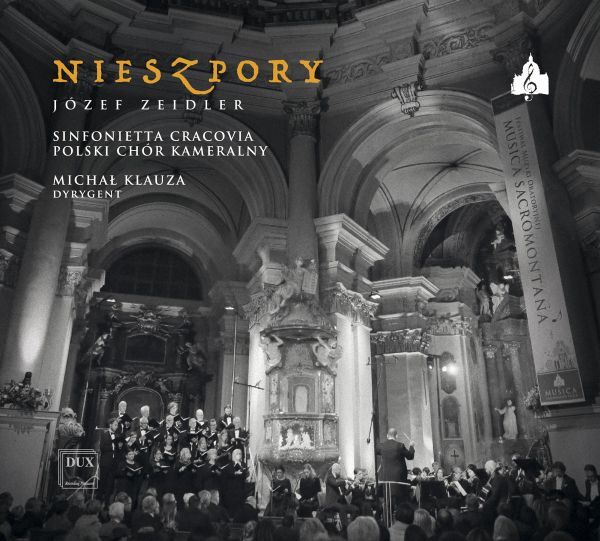
A CD "Józef Zeidler - Vespers" recorded by Polski Chór Kameralny for the DUX label was nominated for the Fryderyk Award in the ‘Oratorio and Opera Music’ category. It was a live recording made during the 14th "Musica Sacromontana" Festival of Oratorio Music in 2019.
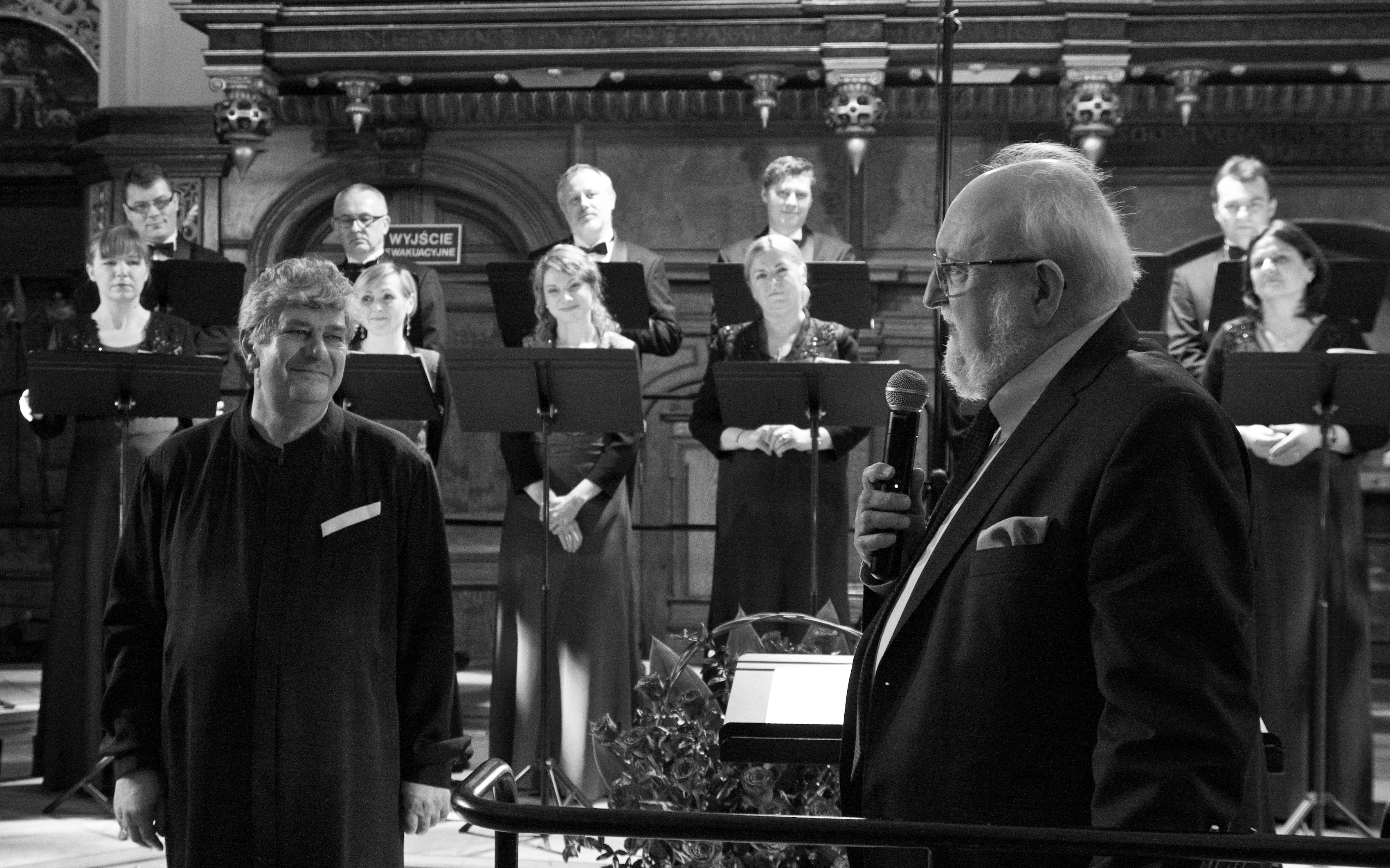
GENIUS OF THE STAVE
The news of the passing of Maestro Krzysztof Penderecki on 29 March 2020 caught the attention of people round the globe, in spite of the raging pandemic. The name of this outstanding artist is well-known and celebrated all over the world. It is immediately associated with classical music, and with Poland.
Over the past 20 years, the Polish Chamber Choir had the opportunity to meet and work with Professor Penderecki many times in Gdańsk, many other cities in Poland and on international tours upon his personal request. We recorded his pieces for a cappella choir and had them specially dedicated to us. Even the tiniest opportunity to be in the Maestro’s presence was an honour, made us proud and gave us a feeling that we had a part in making history.
For the members of the Polish Chamber Choir, led by its conductor Jan Łukaszewski, Maestro Krzysztof Penderecki was not only a genius of the stave, but also a friend.
The first recording of Krzysztof Penderecki’s music by the Polish Chamber Choir (called Schola Cantorum Gedanensis at the time) was his “Agnus Dei” in 1981, on a cassette titled Tschaikowsky, Verdi, Penderecki, Łuciuk, Negro Spirituals, Russisches Volkslied released on the Verlag Dr. Rossek label. In 2008 Musica Sacra Edition released a record with works by the Polish composers: Kilar | Penderecki | Borkowski | Łukaszewski | Chyrzyński | Kowalski-Banasewicz, with two pieces by the Maestro: “Veni Creator Spiritus” and “Benedictus”. In 2009, one of the most important items in the discography of the Polish Chamber Choir: Penderecki | Complete Choral Works | Wszystkie Dzieła Chóralne was released. A winner of many awards and a favourite of critics, the disc got a sequel: Penderecki | Choral Works | Utwory Chóralne Part 2, released in 2013. Both albums were released on the DUX label, both are winners of the prestigious Orphée d’Or award from the French Academie du Disque Lyrique and are an almost complete set of Krzysztof Penderecki’s works for a cappella choir.
In 2014 came the completion of a very exclusive album: Krzysztof Penderecki. Missa Brevis. Sketches, manuscript, recording. To Krzysztof Penderecki on his 81st Birthday, edited by Artur Matys. Released in a limited edition of 199 numbered copies, it contains, besides a CD with a recording of the “Missa Brevis”, facsimiles of the composer’s scores and notes.
There is one piece by Krzysztof Penderecki on our Choir’s latest disc: Polish Choir Music | Polska muzyka chóralna, released by DUX in 2018. The carol “My też pastuszkowie” (“We Shepherds Too”), dedicated personally to Jan Łukaszewski, written in 2015 and premiered by the Polish Chamber Choir at the composer’s final monographic concert at Gdańsk’s Artus’ Court on 30 January 2016.
Furthermore, the Polish Radio and Polish Television archives are full of recordings of works by Krzysztof Penderecki conducted by Jan Łukaszewski and by Krzysztof Penderecki himself.
Problem czytania i pisania nut (The Issues of Reading and Writing Notes) by Leon Łukaszewski is a new book published by the Polish Chamber Choir. It was co-financed by the Fund for the Promotion of Culture of the Ministry of Culture, National Heritage and Sport, within the framework of the ‘Muzyczny ślad’ (Musical Trace) Programme implemented by the Institute of Music and Dance.
The book was edited and prefaced by Anna Kalarus, holder of a post-doctoral degree and lecturer at the Faculty for Musical Education of the Music Academy in Kraków.
Here are two excerpts from her preface:
(...) In his publication, the author begins by drawing up a balance sheet of previous research in the field of ear training and the development of so-called musicality. He gives a thorough and penetrating chronological presentation of the various methods and systems. He begins with the traditional methods of Guido d'Arezzo and Jean-Jacques Rousseau, moving on to Pierre Galina, Guillaume-Louis Bocquillon, and to John Curwen’s Tonic sol-fa, John Evans’s phonogesture method and Cark Eitz’s 12-syllable system. The last three approaches are analysed with particular attention. In analysing modern methods of musical education, the author expresses concern with the fact that they do not treat ear-training, including the skills of reading and writing notes, as their main and fundamental components but as elements of secondary importance, or even as supplementary. Despite this, the author writes with due respect about the work of the “big three”, i.e. Carl Orff, Émile Jaques-Dalcroze and ZoltánKodály, as well as other 20th-century music theoreticians, including Poles.
(...) The most important and perhaps the most interesting part of the book is the presentation of the author’s own concept of perfecting the ancillary means in the reading and writing of notes. In the first instance, the author deals with the streamlining of musical notation. His starting point is the tempered 12-semitone scale and the ultimate result is a notation on staves of different width, without clefs or accidentals, with the line c defining absolute pitch. The other element of the author’s project is a transformed, reformed syllabic system. By introducing new syllables, he creates a 12-stage syllabic chromatic sequence. Linked to the changes in the syllabic system is a modified phonogesture. The whole project is complete with the author’s recommendations regarding exercises and the practical of the modernized system of reading and writing notes.
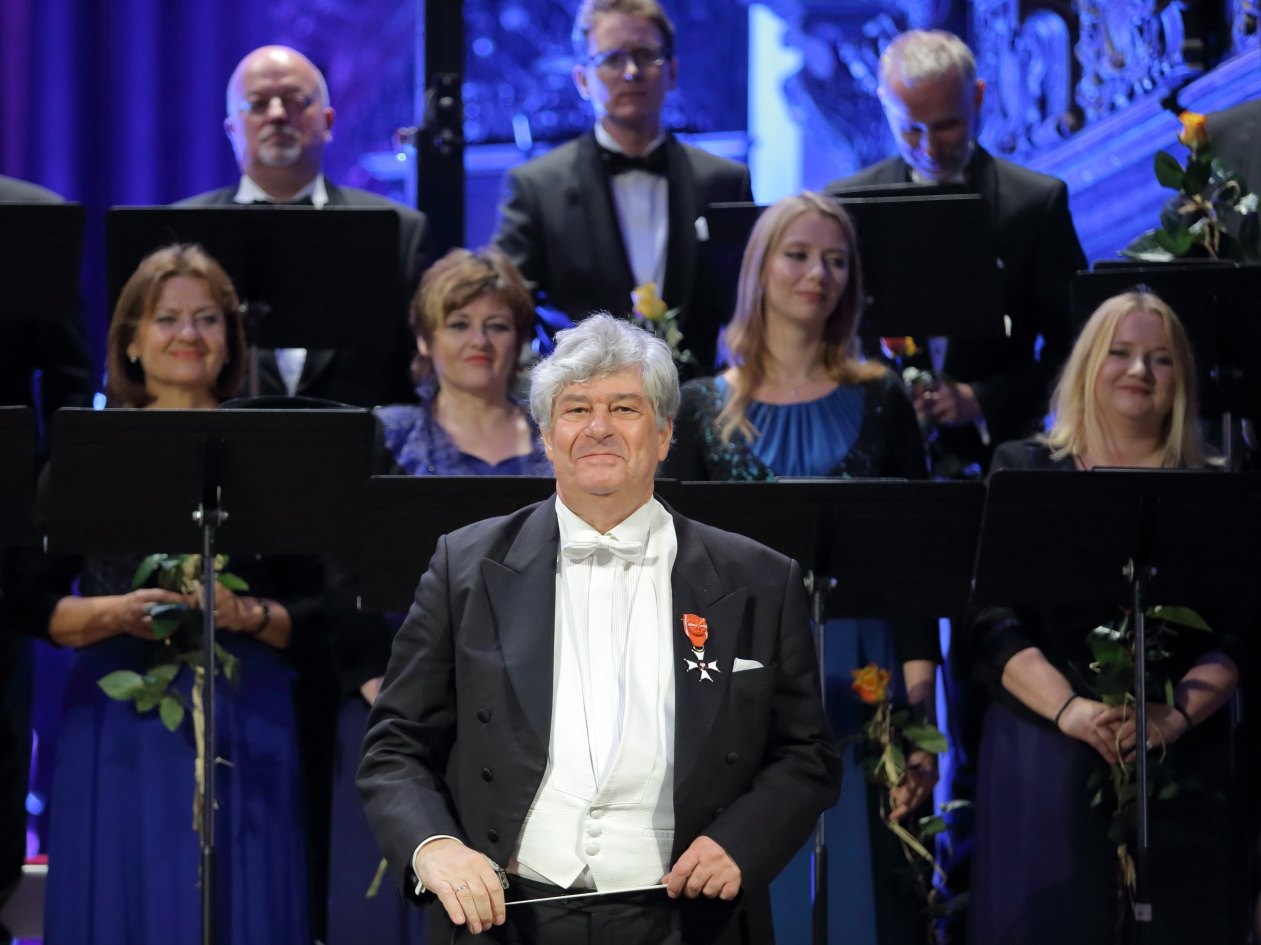
We are happy to announce that Jan Łukaszewski, the Director of the Polish Chamber Choir, received the prestigious Award for the Promotion of Polish Contemporary Music from the Management of the ZAiKS Polish Society of Authors and Composers.
The Award was established by the ZAiKS Management on a proposal of its Art Music Section. It is given to those who help to broadly promote Polish contemporary music both through its performance at festivals and concerts, and by publishing papers and articles on it. The award may go to festival organisers, concert promoters, conductors, musicians, journalists, musicologists and music theorists. The award is presented annually since 2006.
This award is all the more valuable for us because it is the first time that it has been given to a musician who focuses on choir music! It is certainly not insignificant that the Polish Chamber Choir, directed for 37 years by Jan Łukaszewski, has an impressive number of almost 700 premieres to its name. It is worth emphasising that these are first and foremost pieces by Polish composers.
Previous recipients of the Award for the Promotion of Polish Contemporary Music include Stanisław Moryto, Marian Borkowski, Joanna Wnuk-Nazarowa and Agnieszka Duczmal.
Sincere congratulations, Director!
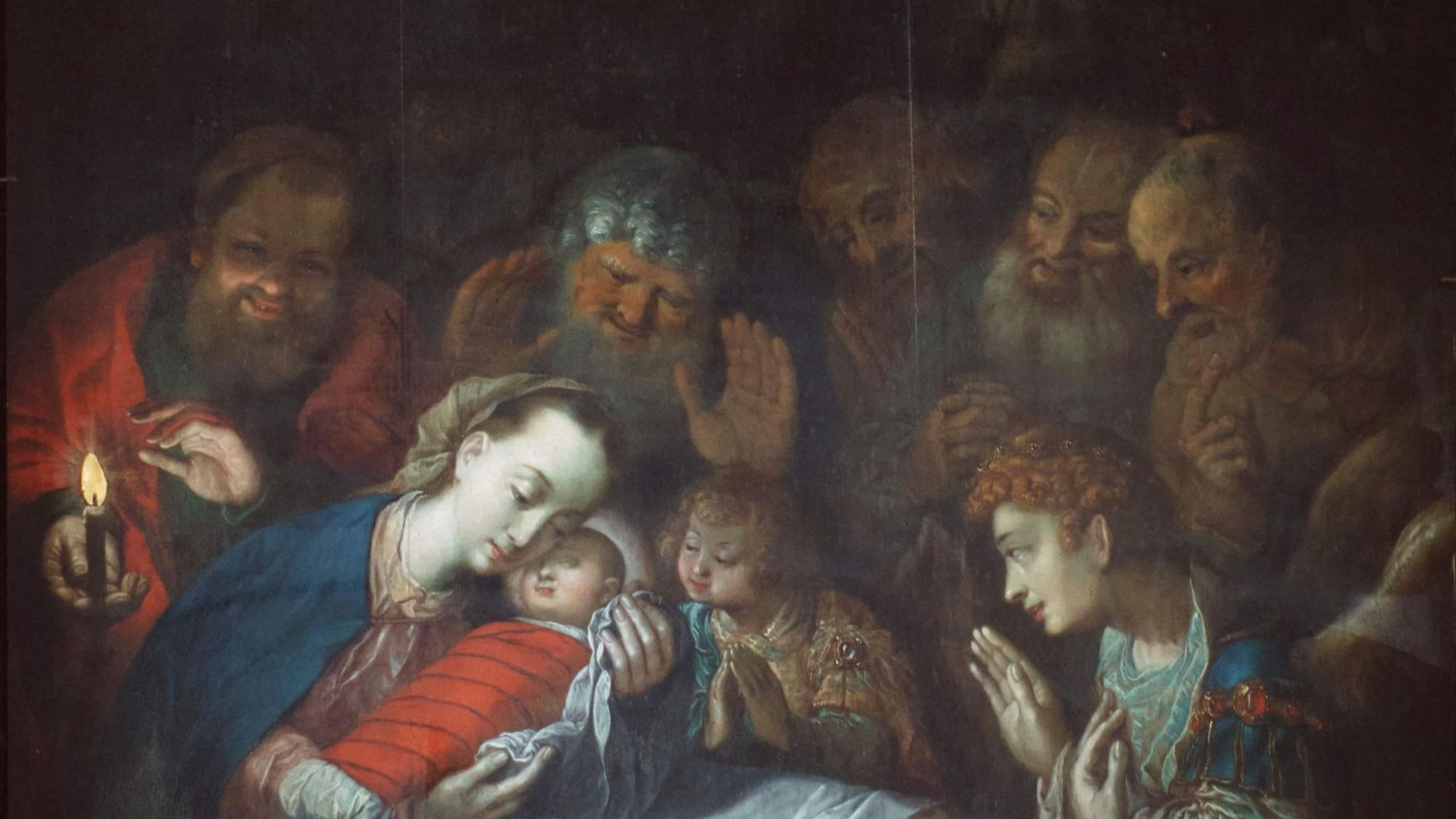
This unusually dark and difficult winter
we wish you
A TRANQUIL YET MERRY CHRISTMAS
and
A HAPPY, HEALTHY
AND PROSPEROUS NEW YEAR 2021

In light of the spread of the SARS-COV-2 coronavirus and following national and regional government orders, we have mandated home office work for the office workers of the Schola Cantorum Gedanensis Polish Chamber Choir from 16 March 2020 until the end of this month.
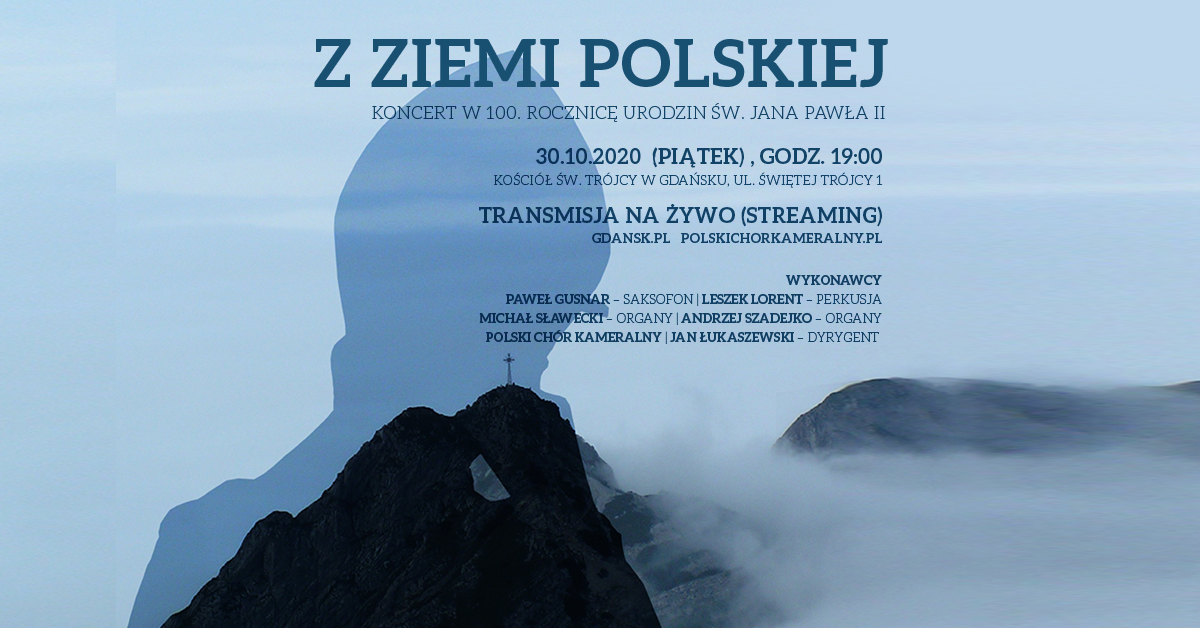
“From the Land of Poland,” a concert performed by the Polish Chamber Choir to commemorate the 100th anniversary of the birth of St John Paul II will take place on 30 October 2020 at 19:00 CET at Gdańsk’s Trinity Franciscan Church. The no-audience concert will be streamed at www.gdansk.pl and www.polskichorkameralny.pl.
The concert is co-funded by the Minister of Culture and National Heritage under the Music Programme carried out by the Institute of Music and Dance.
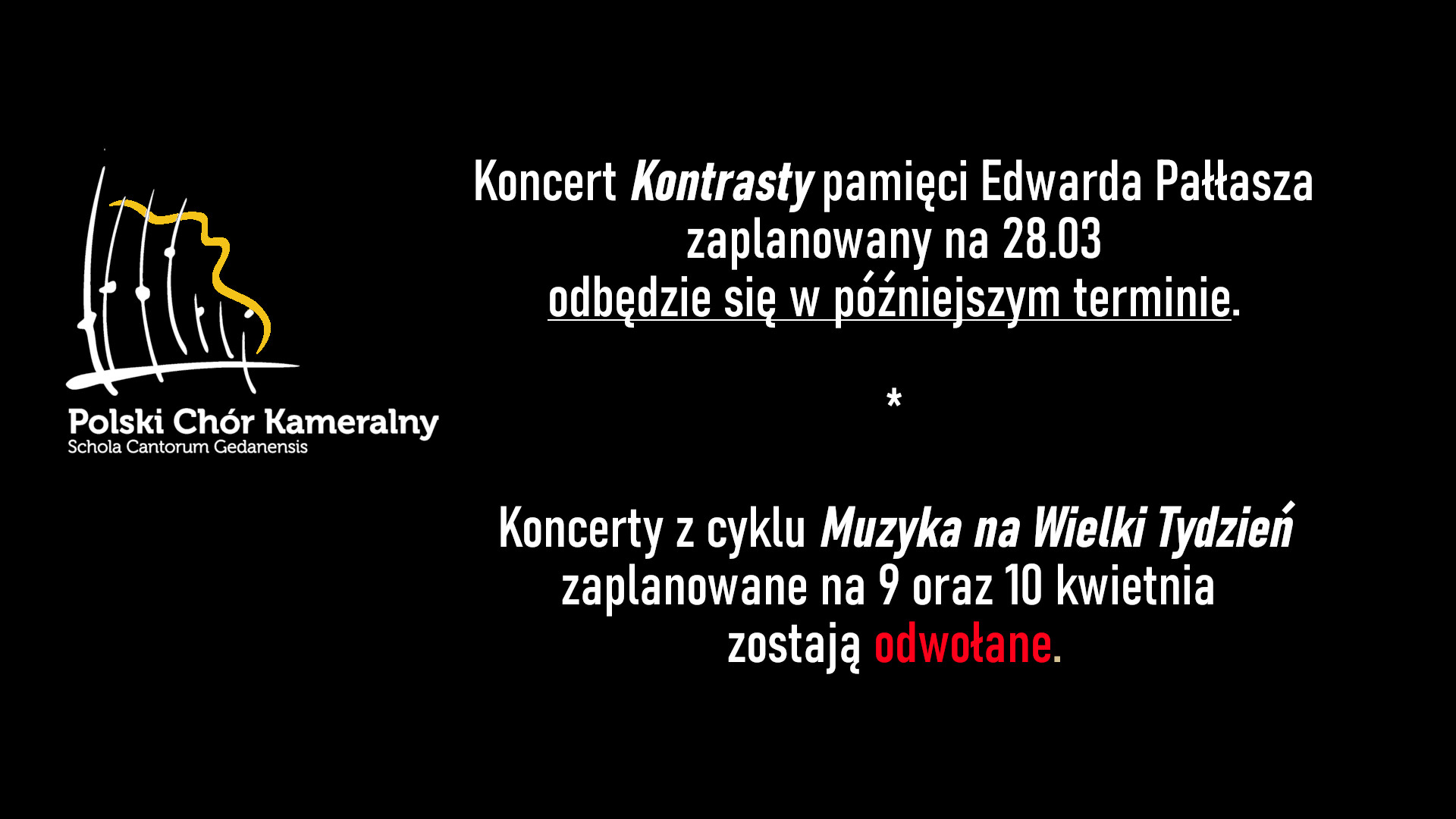
Ladies and Gentlemen,
We would like to inform you that, in the interest of our common safety and health and in accordance with the decision of the SARS-COV-2 coronavirus crisis management team including the Minister of Culture and National Heritage, concerts by the Polish Chamber Choir will be suspended until further notice.
Please accept our apologies for any inconvenience.
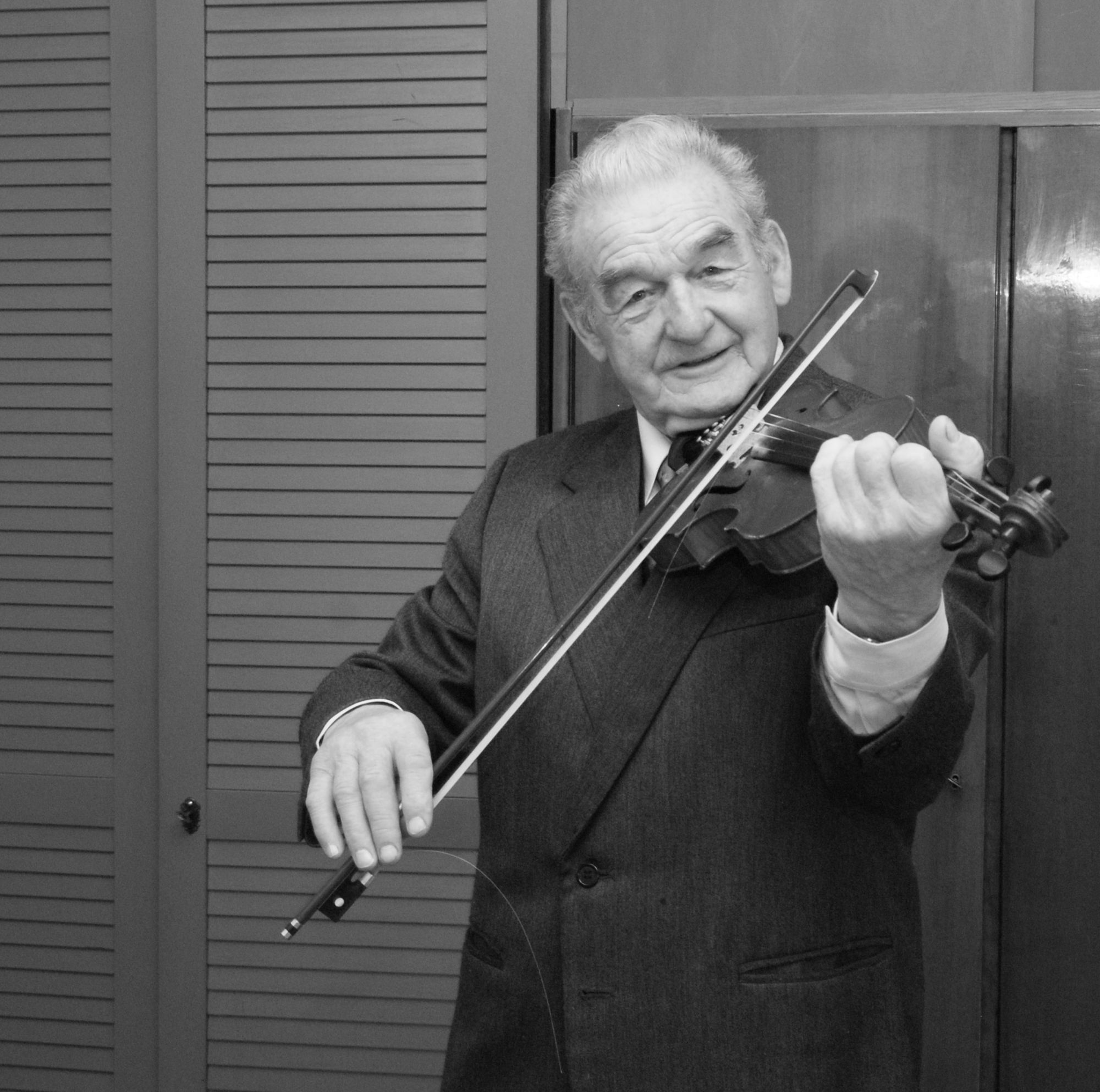
On 22 October 2020 Jan Koliński passed away at 92 years old. He was a long-standing member of the male choir at the Church of the BVM of the Holy Rosary in Gdańsk,
a music and choral singing lover and the father of our colleague Katarzyna Wittschenbach.
The funeral mass will be held on 27 October 2020 at 12:30 at the Cistercian Church in Gdańsk - Oliwa.
We wish to convey our deepest condolences to Katarzyna and Lech Witschenbach and their family. May he rest in peace.
Polish Chamber Choir, Polish Chamber Choir office and Director Jan Łukaszewski

Our record Musica Sacromontana XIV has been nominated for a Fryderyk 2020 award in the category: oratory and opera/classical music album of the year.
The record’s Missa ex D by Józef Zeidler (ca. 1744–1806) is for four vocal parts (SATB), two violins, two trumpets and organ. In it, Zeidler presents very sound compositional skills, full of diverse musical effects.
The Gniezno music collection has two compositions by Antoni Habel (1760-1831) , including one symphony. The Symphony in D major was written for two violins, viola, two flutes, two horns and basso continuo. In the Polish-Lithuanian Commonwealth of the time, the main role in spreading symphonies was played by church centres and the ensembles playing there. They accompanied church services. Therefore, they were a type of local church symphony that, nevertheless, was inspired by European models. Habel’s symphony is an example of this.
The MUSICA SACROMONTANA Festival serves to continue the aims of the Congregation of the Oratorian Fathers who wanted to evangelise through broadly understood spreading of culture. It was thanks to their efforts that an esteemed ensemble was formed in Gostyń already in the 17th century, and the most distinguished composers would travel there.
The record is dedicated to the Congregation of the Oratory in commemoration of the hundredth anniversary of their return to the Basilica of the Holy Mountain (Świętą Góra) (1919-2019)
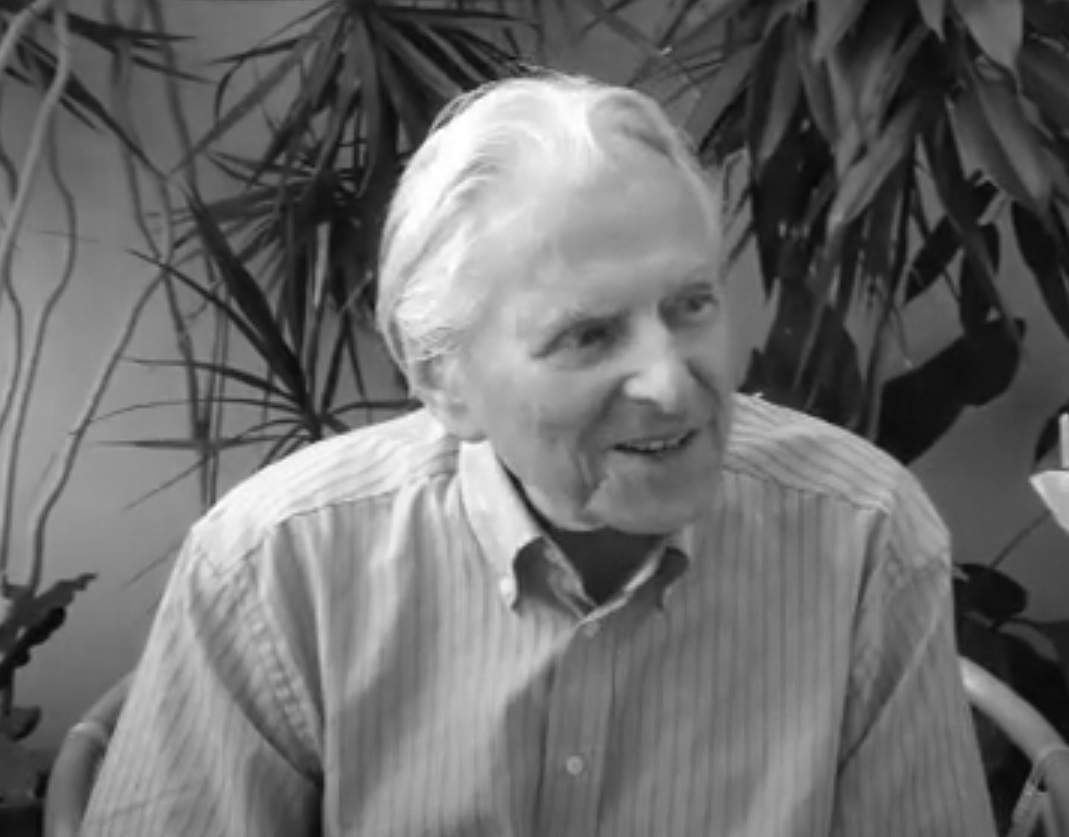
A distinguished composer with a huge oeuvre and a friend of the Polish Chamber Choir has died at 93 in Kraków in the evening of 17 October.
He studied in Kraków with Stanisław Wiechowicz, in Paris with Nadia Boulanger and took part in seminars with Olivier Messiaen himself. He wrote operas, ballets and was a Polish pioneer in experimental music with prepared piano, but it was the human voice that always was the focal point of his interests.
The composer’s first meeting with the Polish Camber Choir, then the Madrigal Ensemble at the State Baltic Opera and Philharmonic, took place in 1979 at the Poznań Music Spring festival. The Choir, conducted by its founder Ireneusz Łukaszewski, performed the premiere of Hymnus de caritate, a piece of sacred music that with time became the main axis of Juliusz Łuciuk’s work. Since then, our ensemble has often performed premieres of his pieces, including his extensive and technically difficult Apocalypsis for soprano, alto, tenor, baritone and mixed choir (1985) or Marian Suite (1983), a five-movement piece inspired by the Polish folk tradition, that won an award at the Polish Episcopate Composers Competition in 1984 and was enthusiastically received by audiences all over the world.
Although humanly speaking we are saddened that this year has taken so many of our musical friends from us, today we are ever so grateful for the opportunity to have been friends with Juliusz Łuciuk, who definitely holds a place of pride in the pantheon of great composers who we had the honour to work with for many years. He was a very humble man, blessed with great charisma and a very special sense of humour. He remained very artistically active all the way up to the end of his life.
We also welcome you to listen to a fragment of an interview with the late Juliusz Łuciuk from the private archive of Prof. Jan Łukaszewski, recorded on 17 June 2018, where they speak of the composer’s Apocalypsis recorded by the Polish Chamber Choir for the “Polish Choir Music” CD (2019).
Rest in Peace. All hail his memory!
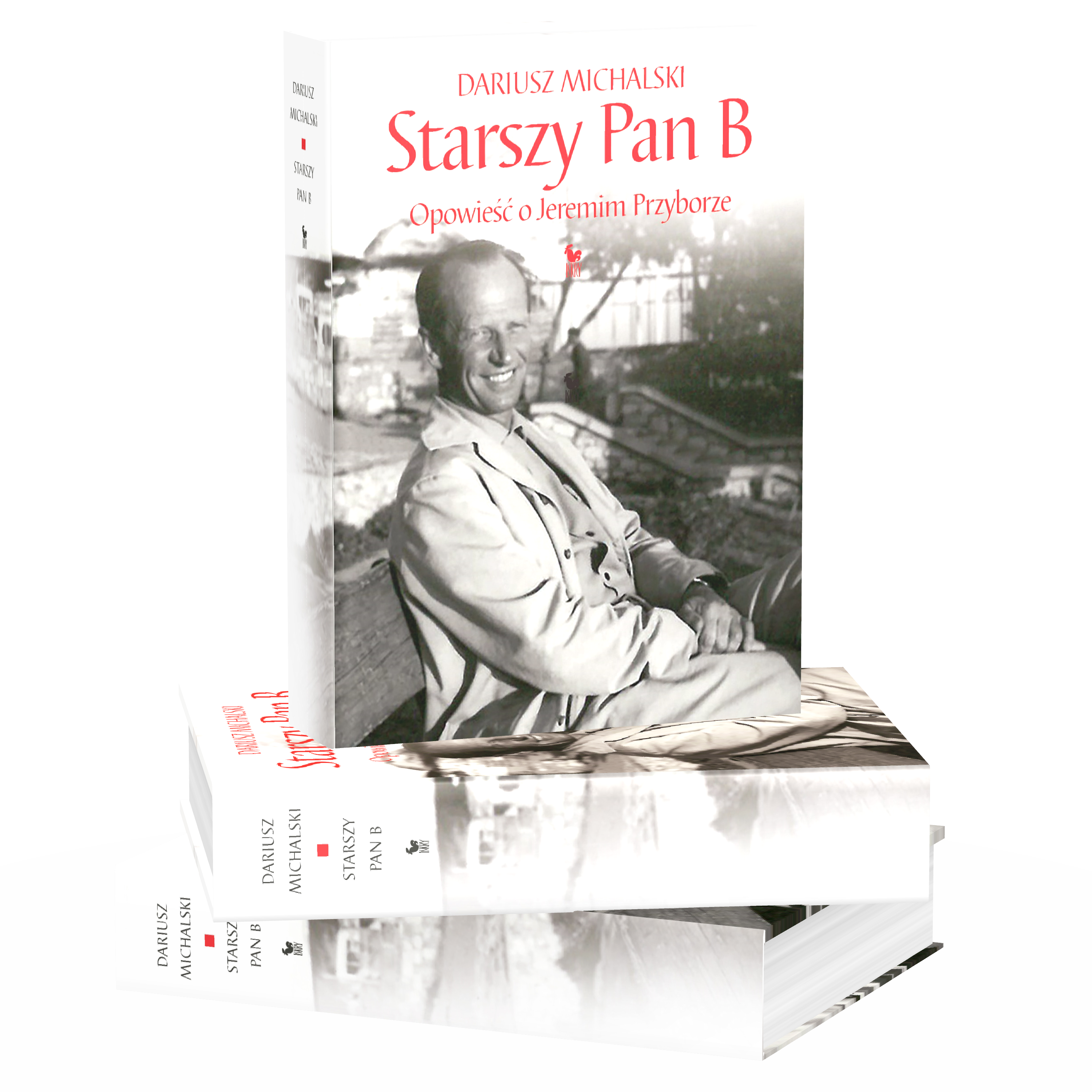
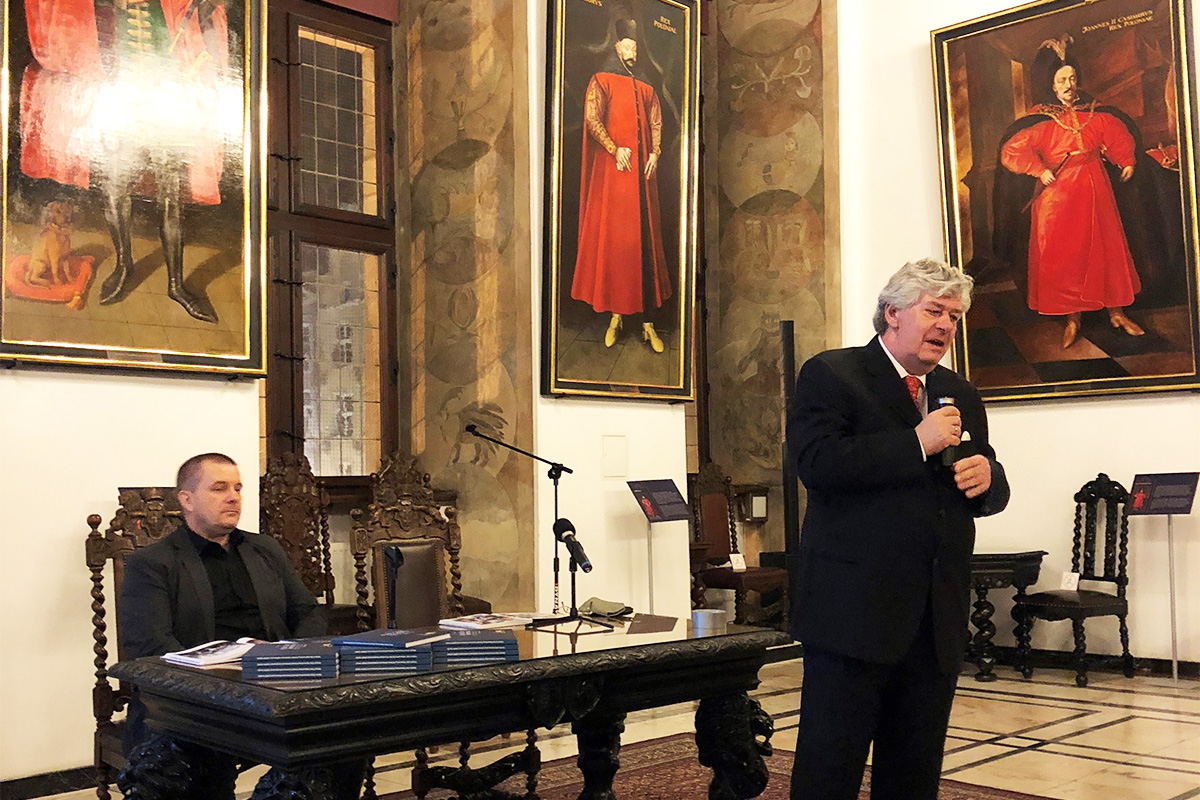
On 14 February 2020 there will be an extraordinary opportunity to buy Dariusz Michalski’s book Starszy Pan B. Opowieść o Jeremim Przyborze (Elderly Man B. The Story of Jeremi Przybora). At the concert, the author will speak about the lives and work of Jerzy Wasowski and Jeremi Przybora and will sign his books after the concert.
A book with a signed dedication is a perfect gift idea!

Log on to a live-stream of our concert at the Gdańsk Music Festival today, 30 September 09, 2020 at 19:00 CET.
Programme:
Henryk Mikołaj Górecki -Totus tuus
Krzysztof Penderecki - Agnus Dei from The Polish Requiem
Krzysztof Penderecki - Psalm 3
Krzysztof Penderecki - Missa Brevis
KYRIE for mixed choir
GLORIA for mixed choir
BENEDICAMUS DOMINO for male choir
SANCTUS for female choir
BENEDICTUS for female choir
AGNUS DEI for mixed choir
Krzysztof Penderecki - O Gloriosa Virginum
Krzysztof Penderecki - Aria from Three Pieces in Old Style
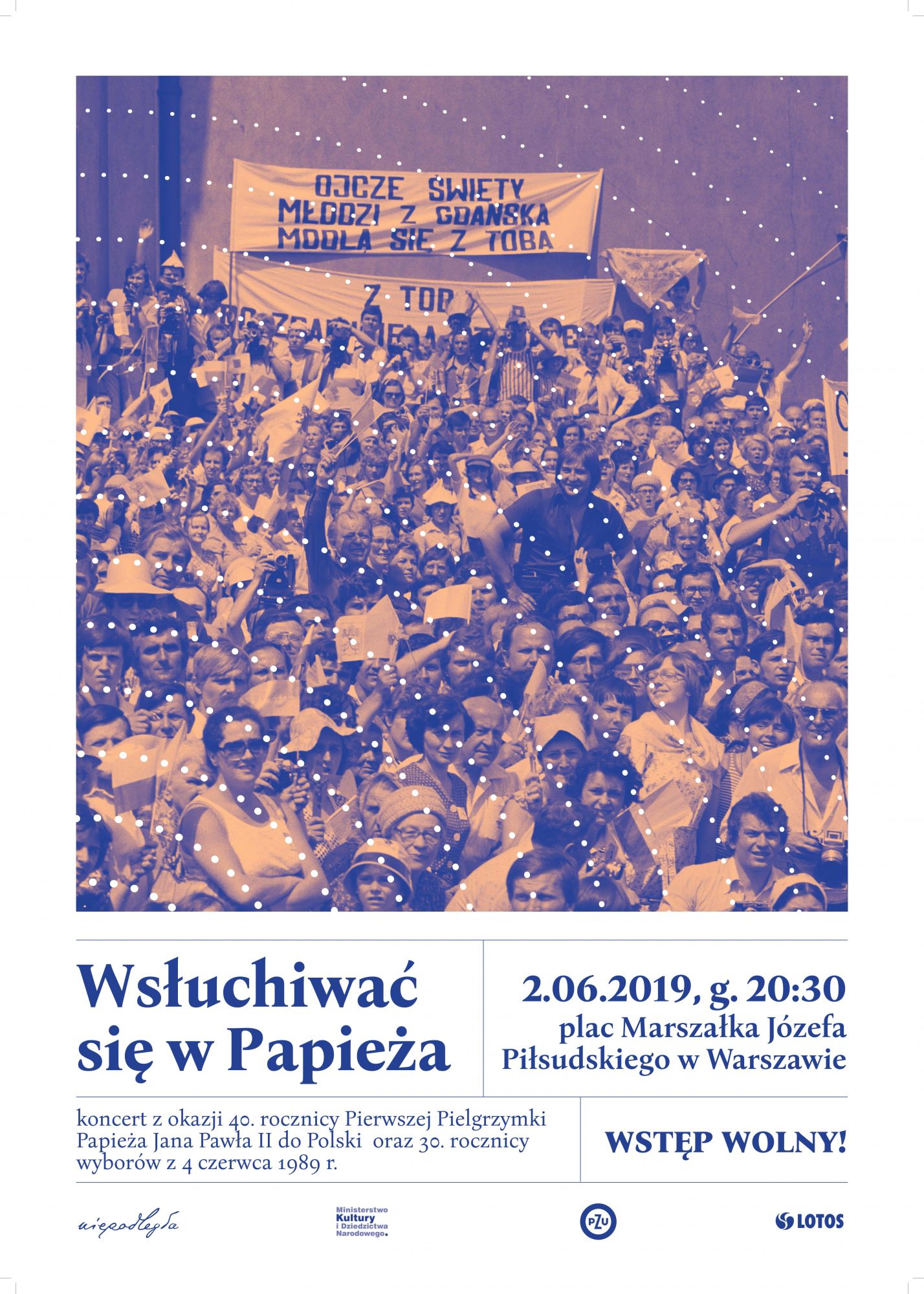
LISTENING TO THE POPE - RECORDING
A fragment of the “Listening to the Pope” concert celebrating the anniversaries of events that brought together the people of Poland and became milestones on the road to freedom:
the 40th anniversary of John Paul II’s first pastoral trip to Poland and the 30th anniversary of Poland’s first democratic election on 4 June 1989.
music: Maciej Muraszko
Written and directed by Halina Przebinda
Jerzy Semkow Sinfonia Iuventus Polish Orchestra
One Heart One Soul Choir
Polish Chamber Choir
Jan Łukaszewski - conductor
Niepodległa
We welcome all of you to tune into a rebroadcast of the 15th Mozartiana Final Concert on 02 September 2020 at 19:30 CET on Polish Radio Two!
Recording produced by Andrzej Solczak
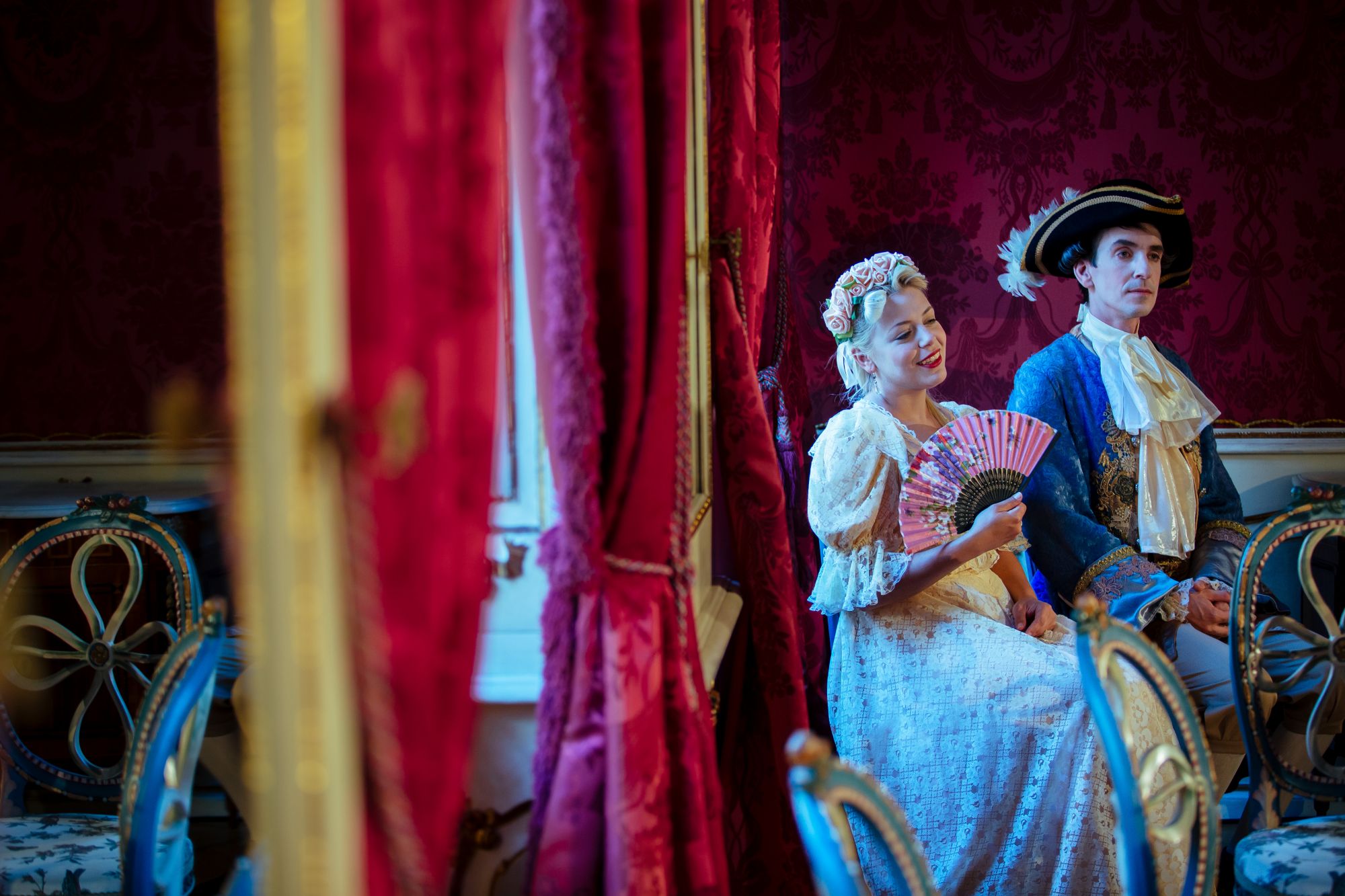
THE BALTIC SEA SOUNDING WITH MOZART
Wolfgang Amadeus in beautiful natural scenery is how one might sum up Gdańsk’s 14th International Mozart Festival (18-24 August). Literally, because most of the concerts were held in Oliwa Park in front of the Abbots’ Palace, and figuratively, besides the music of its namesake (often of the lighter variety), the event’s musical landscape consisted of broadly-understood paraphrases of his music, in all sorts of conventions, which proves yet again the brilliant universality of the Salzburg composer.
One of the most successful of these paraphrases was the Vows „fan tutte,” which brought together Cosi fan tutte with Aleksander Fredro’s comedy Maidens’ Vows, whose fragments were combined by director Natalia Babińska in an intelligent, feisty and well-founded way, building on an idea from Festival head Jan Łukaszewski (22 August). Although they have vectors acting in opposite directions, both the play and the opera are similar in their highlighting of tamed youthful amatory defiance and the mesmeric magnetism of the heart. (The originator of the theory of mesmerism, F.A. Mesmer, actually commissioned the 12-year-old Mozart to write the singspiel Bastien & Bastienne.) The performers, all associated with the Warsaw Chamber Opera, soprano Anna Mikołajczyk-Niewiedział (Fiordiligi/Klara), mezzosoprano Elżbieta Wróblewska (Dorabella/Aniela), tenor Aleksander Kunach (Ferrando/Albin), baritone Tomasz Rak (Guglielmo/Gustaw) and bass Robert Gierlach (Don Alfonso/Radost/Narrator) delighted the audience not only with their beautiful singing, but also with their excellent acting with a good feeling for Fredro’s supple phrasing, which is something not at all common. All this to the emphatic accompaniment by the Polish Baltic Philharmonic Orchestra conducted by Massimiliano Caldi.
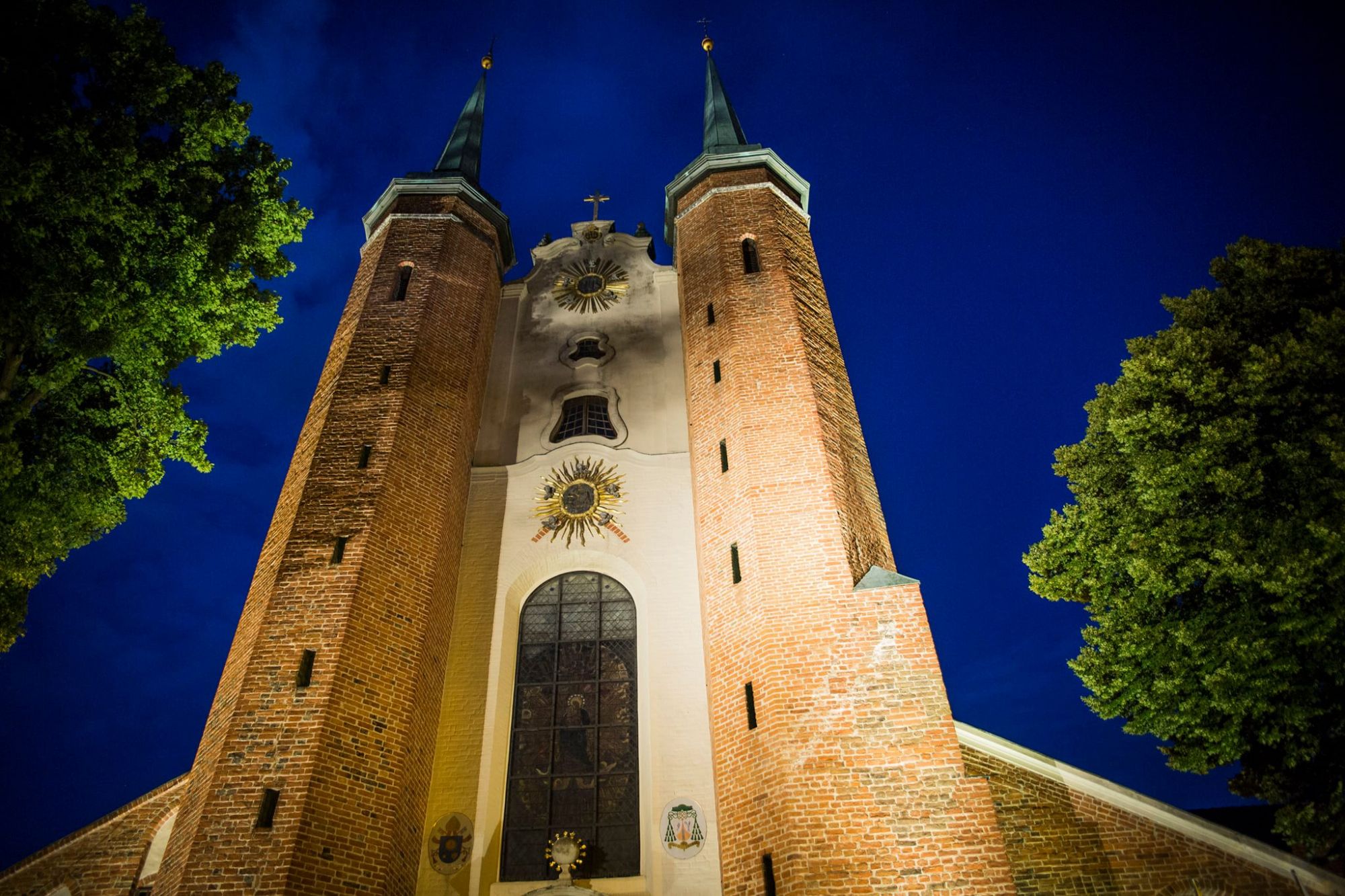
The Festival’s unquestionable highlight was the final concert with Mozart’s Requiem. No wonder, because the names were all major league: Akademie für Alte Musik Berlin, the Polish Chamber Choir and its conductor Jan Łukaszewski and soloists: Israeli soprano Talia Or, Polish alto Ewa Marciniec and Britons Thomas Elwin (tenor) and Darren Jaffery (bass). Their highly emotional performance, particularly AKAMUS’, featured a simply transfixing contrast between the lyrical sections, especially Lacrimosa, and the apocalyptic dramatic parts (Dies Irae, Rex Tremendae, Confutatis). This contrast, a core feature of both the requiem mass and the interior of Oliwa Cathedral, where it was performed, with its gloomy darkness and heavenly light. This effect as enhanced by adding a Gregorian chant performed by the Schola Gregoriana Cardinalis Stephani Wyszyński (magister chori – Michał Sławecki), although I felt this to be superfluous.
Out of the three pre-festival chamber concerts in the rococo interior of Gdańsk’s Uphagen House, I would like to highlight the final one, where the German pianist Heide Görtz and her Norwegian former student Tina Margareta Nilssen, The Dena Piano Duo, gave a passionate performance of Mozart in an arrangement by Grieg: the Sonata in F major, G major and the C minor Fantasia with accompaniments for second piano added by the Scandinavian.
The Festival also had its share of improvisation, so close to the composer’s heart. The evening concerts featured jazz musicians: the brilliantly perfectionist Leszek Kułakowski Jazz Orchestra (third stream), the klezmer Bester Quartet, finally the disarmingly charming, loose and world-renowned Klazz Brothers & Cuba Percussion and its Latin American rhythms.
The Gdańsk event was complemented by: horn player Paweł Cal with the Łódź Philharmonic Orchestra conducted by Paweł Przytocki, young violinist Robert Traksmann with the Tallinn Chamber Orchestra conducted by Juha Kangas and, last but not least, Schönbrunn Palace’s Marionette Theatre and its production of the Abduction from the Seraglio, a real treat for children big and small.
Monika Partyk
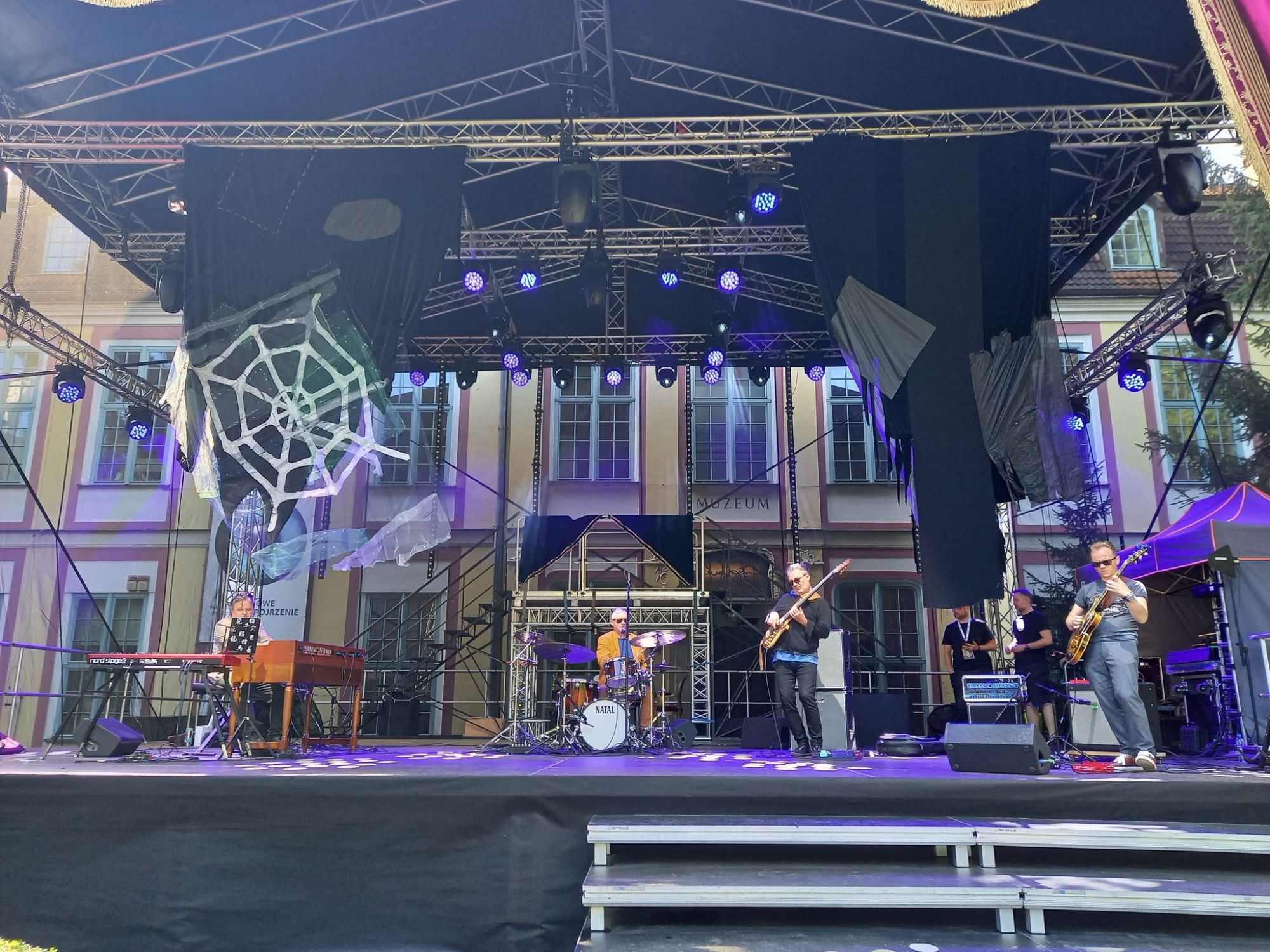
The countdown to the concerts of the 15th Mozartiana International Mozart Festival is on. The Wądołowski Quartet have wrapped up their soundcheck just moments ago. We will hear them today (Thursday, 27 August) at 22:00 CET in the Courtyard of the Abbots’ Palace in Oliwski Park. A little teaser: their Mozart in Jazz setlist will include their arrangement of the famous Requiem in d-minor KV 626 and The Magic Flute.
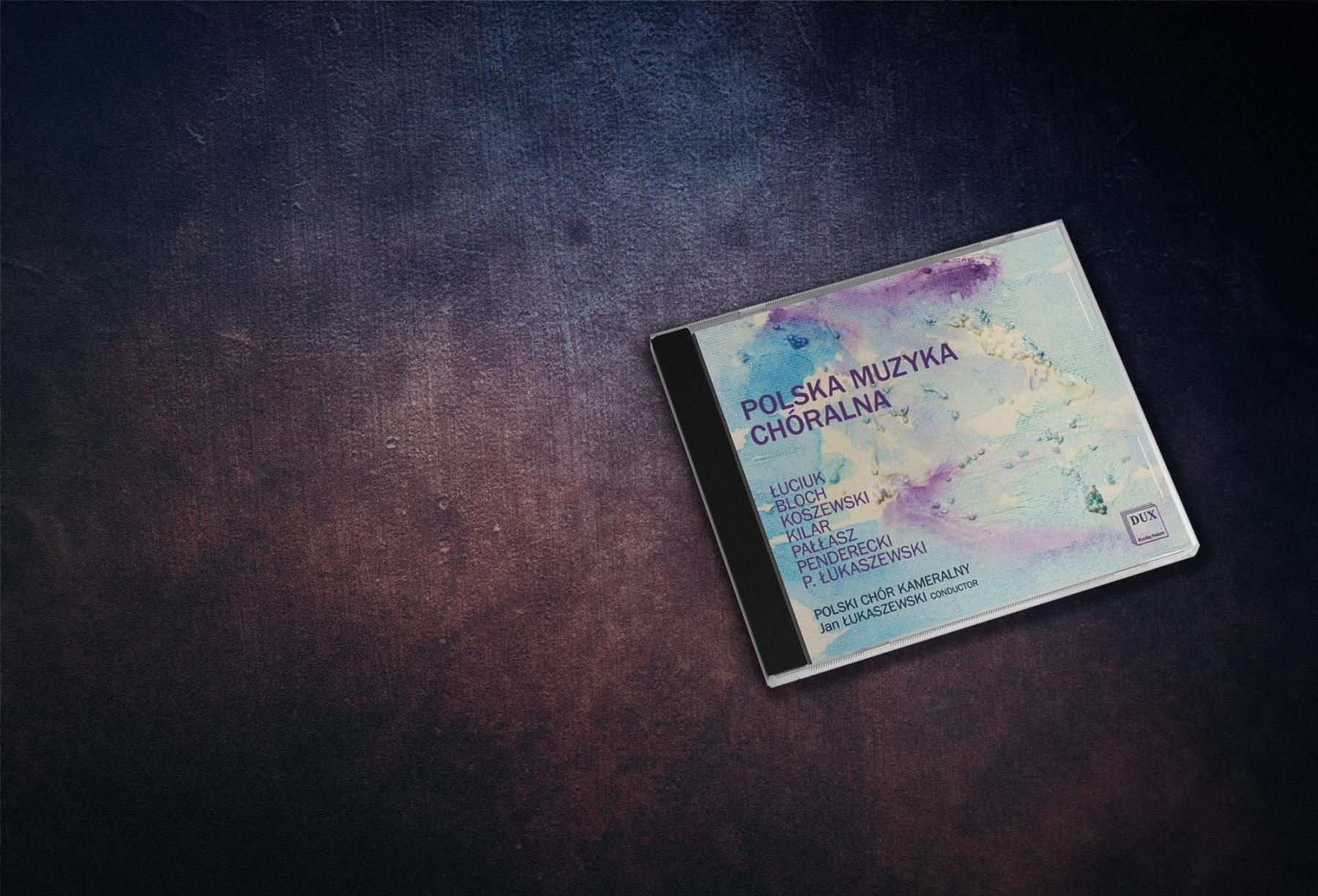
Poland Muzyka Chóralna/Polish Choir Music CD by the Schola Cantorum Gedanensis Polish Chamber Choir conducted by Jan Łukaszewski has been nominated for a Fryderyk 2019 Award in the classical music category for: choir, oratorio and opera album of the year. This is already the 21st nomination received the Polish Chamber Choir for the Fryderyk Awards.
Year of release: 2018
Medium: CD
Label: DUX
Number: 1505
Performers: Polish Chamber Choir | Jan Łukaszewski - conductor
Andrzej Koszewski
Unitis viribus for mixed choir a cappella (2002) lyrics: Latin aphorism
1. Crux-Lux [3:11]
2. Ad multos annos [2:24]
Paweł Łukaszewski
Anima Christi for mixed choir a cappella (2018)
3. Anima Christi for mixed choir a cappella | for mixed choir a cappella (2018) [4:49]
Juliusz Łuciuk
Apocalypsis for soprano, alto, tenor, baritone and mixed choir (1985)
4. Festivo [5:25]
5. Misterioso con dolcezza [2:55]
6. Teneramente [2:31]
7. Espressivo molto [4:53]
8. Gioioso sonore [2:19]
Wojciech Kilar
Lumen for mixed choir a cappella (2011)
9. Lumen for mixed choir a cappella | for mixed choir a cappella (2011) [5:16]
Edward Pałłasz
Et... for 24 voices (2013) lyrics: Book of Revelation by St John, 20:11-15
10. Et... na 24 głosy | for 24 voices (2013) lyrics: Revelation of St John, 20:11-15 Book of Revelation by St. John, 20:11-15 [13:38]
Augustyn Bloch
W górze nad nami [High Up Above Us] meditations for 4 sopranos, 4 altos, 4 tenors, 4 basses and organ (2003)
11. W górze nad nami [High Up Above Us] meditations for 4 sopranos, 4 altos, 4 tenors, 4 basses and organ (2003) [17:36]
Krzysztof Penderecki
My też pastuszkowie [We, the Shepherds, Too] for mixed choir a cappella (2015)
12. My też pastuszkowie [We, the Shepherds, Too] for mixed choir a cappella | for mixed choir a cappella (2015) [1:50]
All those who can’t see us person are welcome to see and listen to us on live-stream!
Start at 20:00 CET!
The stream will later be available on YouTube
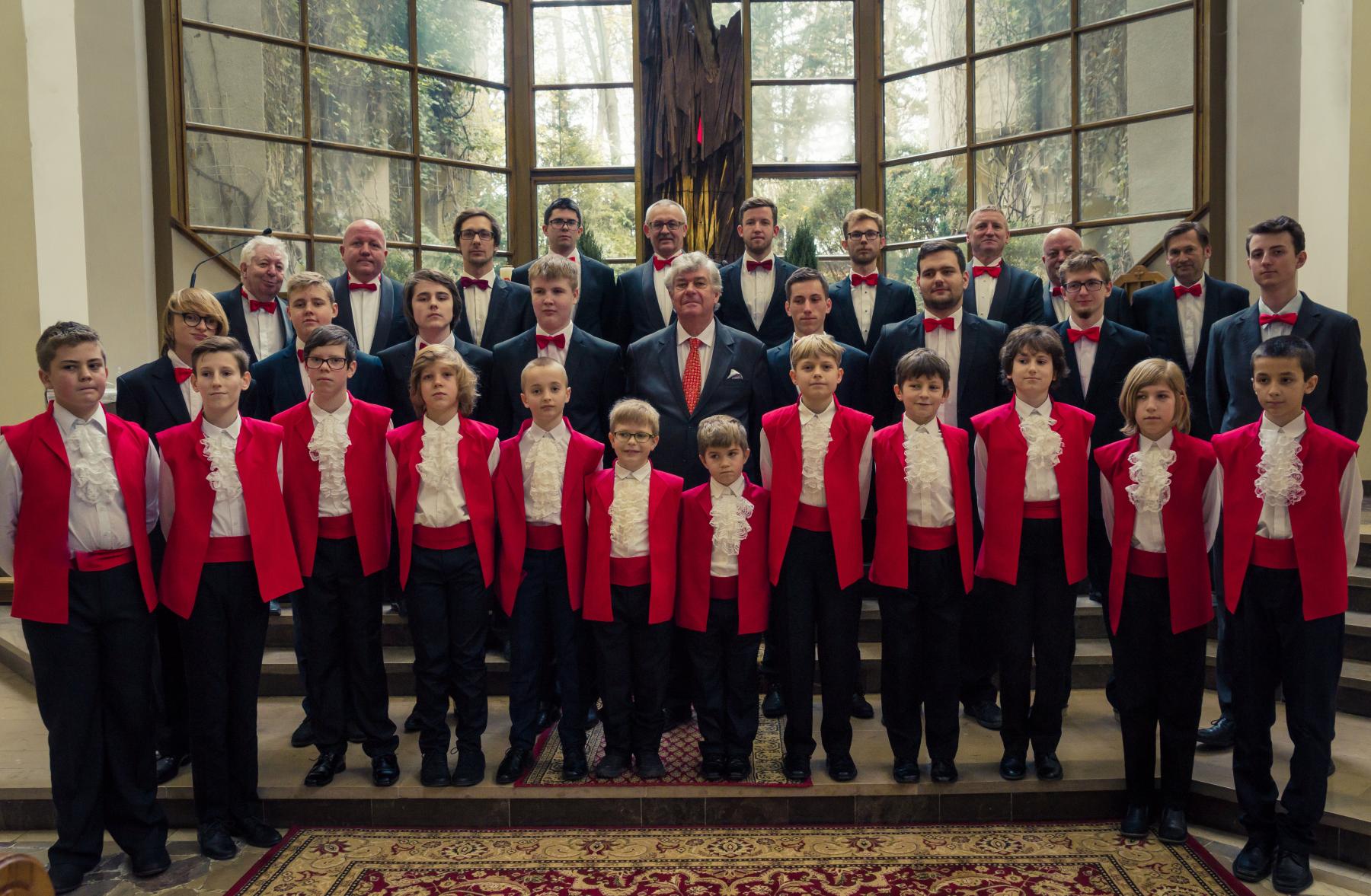
We welcome boys aged 7-11 together with their parents to an organisational meeting of the Boys’ and Men’s Choir Pueri Cantores Olivenses on 11 March 2019 at 17:30 to Primary School No. 89 at ul. Szyprów 3, 80-335 w Gdańsku (Żabianka).
History:
Pueri Cantores Olivenses is a boys' and men's choir of over a dozen talented boys and men. Established in 1972 by the brothers Bogdan and Jan Łukaszewski. With the warm support of Prelate Leon Kossak-Główczewski, then the parish priest of the Arch-cathedral Basilica in Oliwa, and educator and composer Leon Łukaszewski, initially the Choir focused on signing at church celebrations. The Choir sang at such events as the visits of Cardinal Karol Wojtyła, Polish Primate Stefan Wyszyński, at mass and other celebrations at the Basilica in Oliwa and other Gdańsk Diocese churches. The Choir also sang at two masses during visits by Pope John Paul II in Poland: in Zaspa, Gdańsk, and at the Sopot Hippodrome. Soon, the Choir began a collaboration with Gdynia’s Musical Theatre on several productions, including Uciechy staropolskie [Old Polish Delights]) and the Baltic Philharmonic Orchestra on oratorios (including Mozart’s Requiem at the commemoration of the 10th anniversary of the massacre of the shipyard workers in Gdańsk and Gdynia in December 1970). The Choir also began to perform outside Poland. Its first foreign performance took place at the international festival in Loreto, Italy, in 1979, which ended with an audience with Pope John Paul II. Further invitations brought the Choir to Austria, Belgium, France, Germany, Norway, Sweden and Switzerland.
To find out more about the choir, please go to our website at: http://pueri.pl
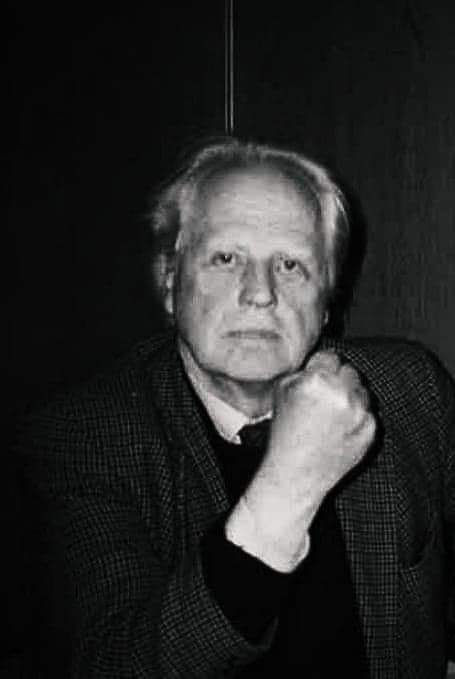
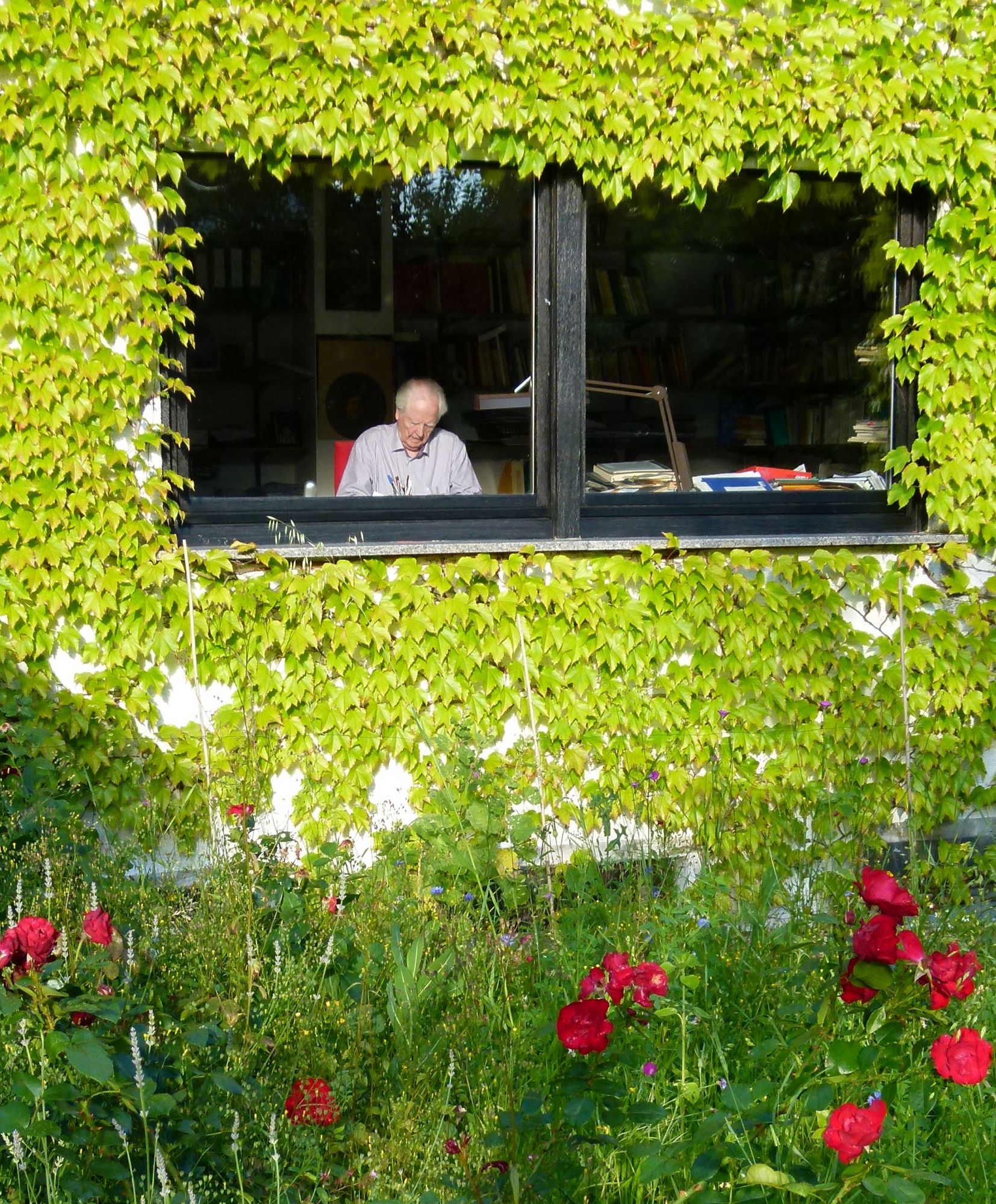
It is with sadness that we learnt about the death Heinrich Poos, outstanding composer and friend of Polski Chór Kameralny. He died in the afternoon of August 19th, 2020 at a hospital in Simmern/Hunsrück (Rhineland-Palatinate, Germany).
Heinrich Poos, son of a Protestant pastor, was born on Christmas Day 1928 in the small, secluded village of Seibersbach in the Hunsrück hills not far from the river Rhine.
Initially, he studied church music in Berlin Spandau where he was inspired by a number of charismatic teachers, headed by the eminent composer Ernst Pepping. He also studied conducting, musicology, theology and philosophy at the Berlin Technical University where he obtained his PhD and worked as a lecturer. From 1971 to 1994 he was a professor at the Hochschule der Künste in Berlin (now Hochschule der Künste Berlin), simultaneously working as a composer and publishing papers and books in the fields of musical analysis, systematic musicology, and history of music. Until the last day of his life he continued working and publishing in both the creative and the scholarly sectors.
The compositions of Heinrich Poos were always inspired by the word and both his sacred and his secular works can be described as a kind of musical sermon. For this reason, most of Poos' compositions are based on texts as diverse as, for example, the poetry of Bertolt Brecht or Joseph von Eichendorff, and the major part of this output are choral works. The artist's cooperation with the Polish Chamber Choir was exceptional and lasted for over thirty years. During that time, the ensemble presented works by Heinrich Poos in Poland and around the world, but also performed the world premieres of such compositions as The Parable of the Prodigal Son, Epistulae, Hypostasis, and the first of three Orpheus Fantasies. Polski Chór Kameralny also performs on most of the monographic albums of music by Heinrich Poos, notably one published by Wergo. The majority of Poos’ important compositions and also a complete catalogue of his works were published by one of the most famous European publishing houses - Schott Music.
Heinrich Poos is considered one of the most eminent contemporary German composers of choral music.
Honour to his memory.
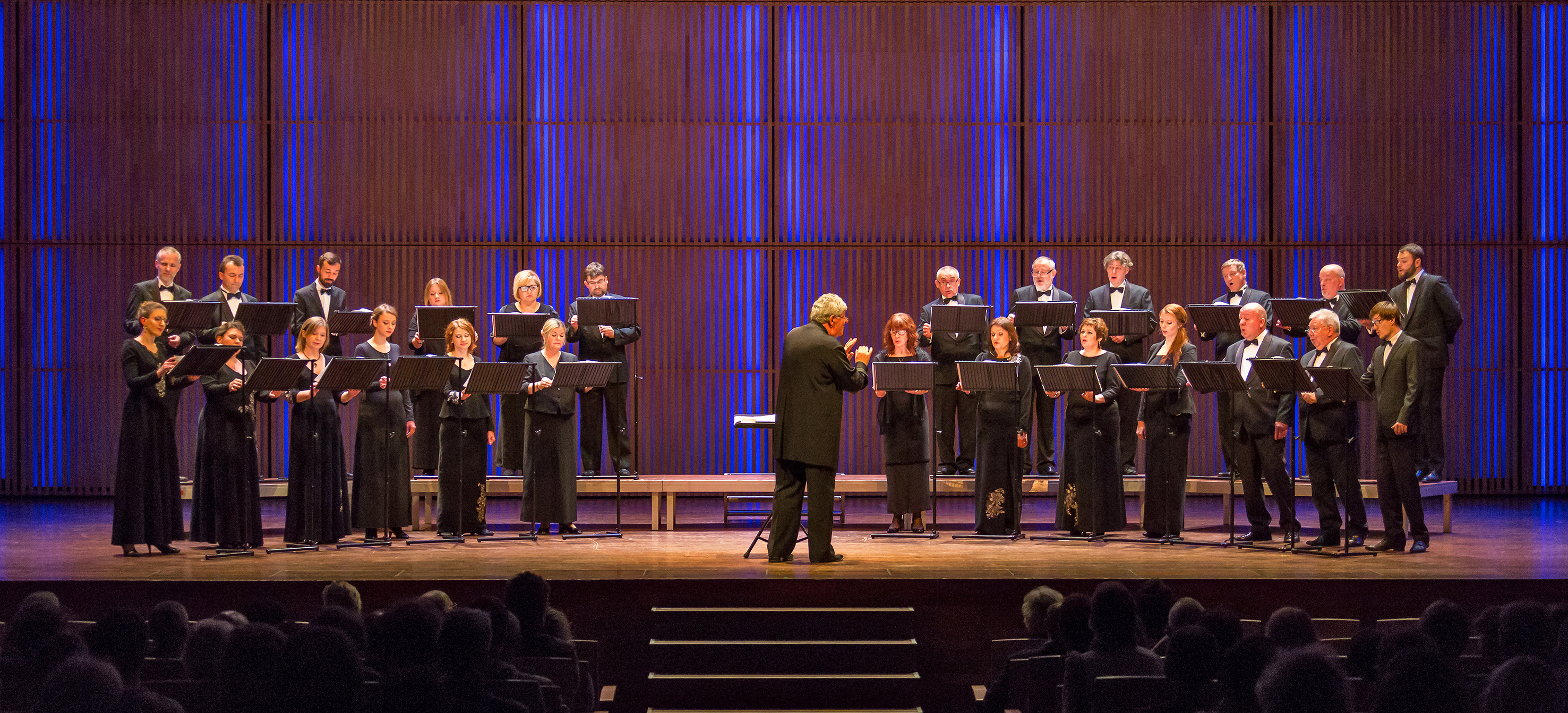
Musica Sacra Nova 2019, 15th International Composers Competition
honorary auspices:
Pontifical Institute of Sacred Music, Rome, The Vatican
The competition is open to composers under 35 years of age of all nationalities.
Every composer may enter more than one work (no more than 3).
Every composition entry may not have been performed, published or taken part in any other competition before.
Compositions must be from 3 to 10 minutes long.
The organisers reserve the right to the debut performances of the winning compositions.
The competition is divided into 2 categories:
- composition for mixed choir (up to 16 voices) set to Christian lyrics in Latin
- composition for a liturgical choir (from 4 to 6 voices) z partią organów set to liturgical lyrics in Latin
Organisers:
Erzbistum Köln, Germany
Freundeskreis Abtei Brauweiler, Germany
Instytut Musica Sacra, Warszawa
Poland Polish Chamber Choir, Gdańsk
Co-organisers:
Gaude Mater International Sacred Music Festival in Częstochowa
The Choir of Trinity College Cambridge, United Kingdom
Jauna Muzika Vilnius Municipal Choir, Vilnius, Lithuania
Competition directors:
Paweł Łukaszewski, Poland
Richard Mailänder, Germany
COMMISSION:
Vaclovas Augustinas – Lithuania
Pawel Łukaszewski – Poland
Eriks Ešenvalds- Latvia
Vincenzo De Gregorio – Italy, The Vatican
Stephen Layton – United Kingdom
Jan Łukaszewski – Poland
Enjott Schneider - Germany
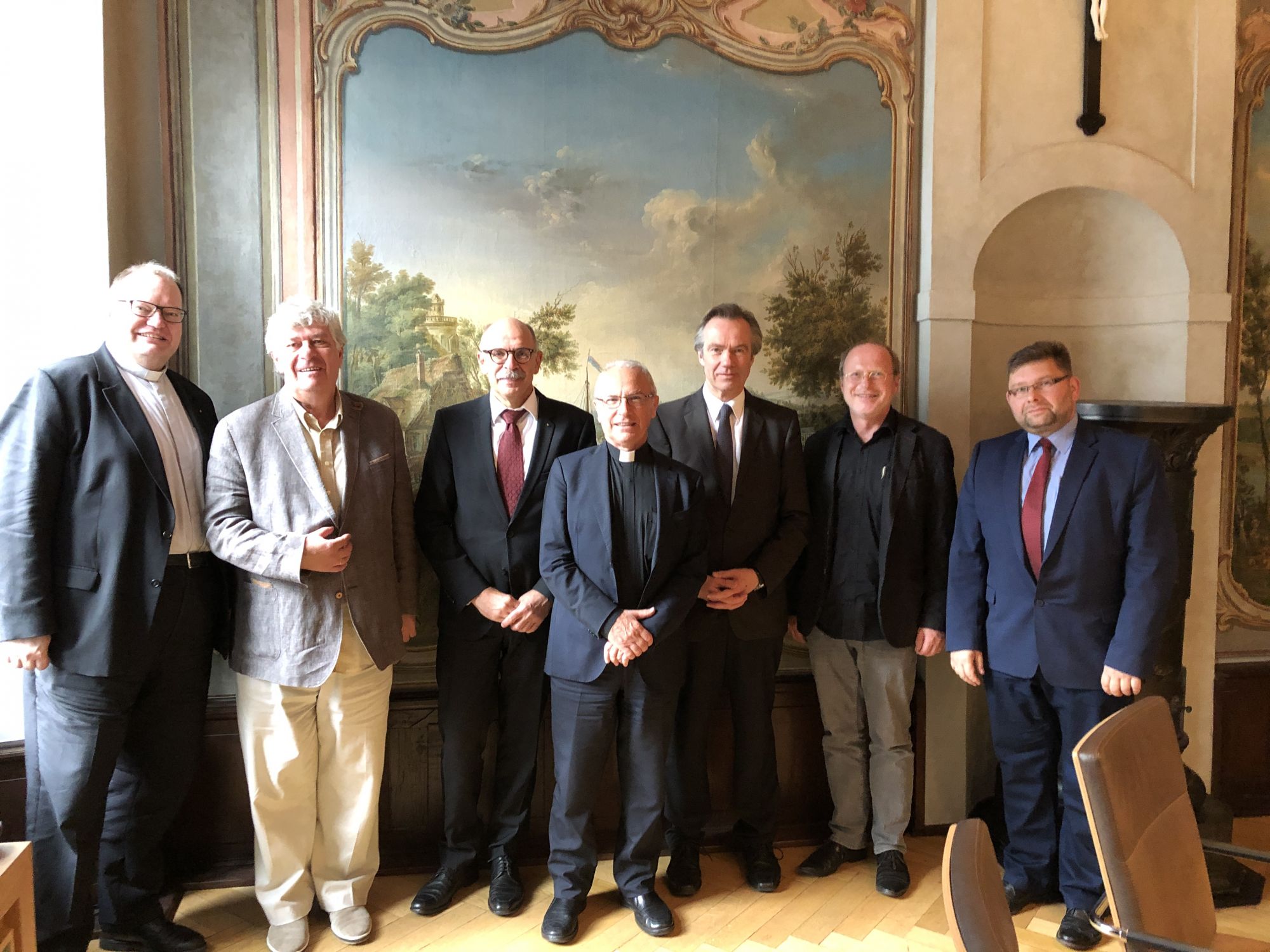
MUSICA SACRA NOVA
The International Musica Sacra Nova Composers Competition dates back to 1996. It was initiated by Paweł Łukaszewski, Professor and prorector at the Fryderyk Chopin University of Music, PhD Hab in composition. The driving force behind this project was a desire to provide new contemporary sacred music repertory.
For its first ten years Musica Sacra Nova was a national competition. Thanks to the efforts of Prof. Marian Borkowski, the chairman of the competition’s jury, a collaboration with the Gaude Mater International Festival began in 2005. This combination helped the competition to flourish, with its prestige growing year by year, attracting distinguished representatives of global choir music such as Stephen Layton or Ēriks Ešenvalds to become jurors. From then on, the contestants have included not only young composers from Europe, but also for example from South Korea, Australia or the United States.
However, with time, when the Częstochowa local government changed, Musica Sacra Nova had to look for alternative support. Thanks to the kindness of Card. Rainer Maria Woelke, this support was provided by the Archbishopric of Cologne. Today the organisers also include the Pontifical Institute of Sacred Music, College of Catholic Church Music and Musical Education in Regensburg, Instytut Musica Sacra society in Warsaw, Friends of Brauweiler Abbey Society and the Musica Ficta Society in Rimini. It should be emphasised that there is no other competition in Poland with such a large array of international partners. On 6 September 2019, all of the above institutions signed an agreement on the joint organising of the Musica Sacra Nova competition. The competition regulations provides for three financial prizes of €2500, €2000 and €1500 awarded at the competition winners’ concert. Each year, a concert of the winners in one of the competition categories will be held in Gdańsk. An important award for the winners of Sacra Nova are recordings of the winning pieces released on prestigious labels and their performance by the best European choirs, including the Polish Chamber Choir from the very beginning of the competition. Moreover, for several years now the scores of the award-winning pieces are published by the prestigious Schott Music Publishing (also publisher of the works of Krzysztof Penderecki).
The Polish Chamber Choir’s participation in such a prestigious project as today’s International Musica Sacra Nova Composers Competition is a great honour. The concert presenting the pieces awarded in last year’s competition will be part of the Papal Triptych cycle which will take place on 22 October at Trinity Church (Kościół Sw. Trójcy) in Gdańsk.
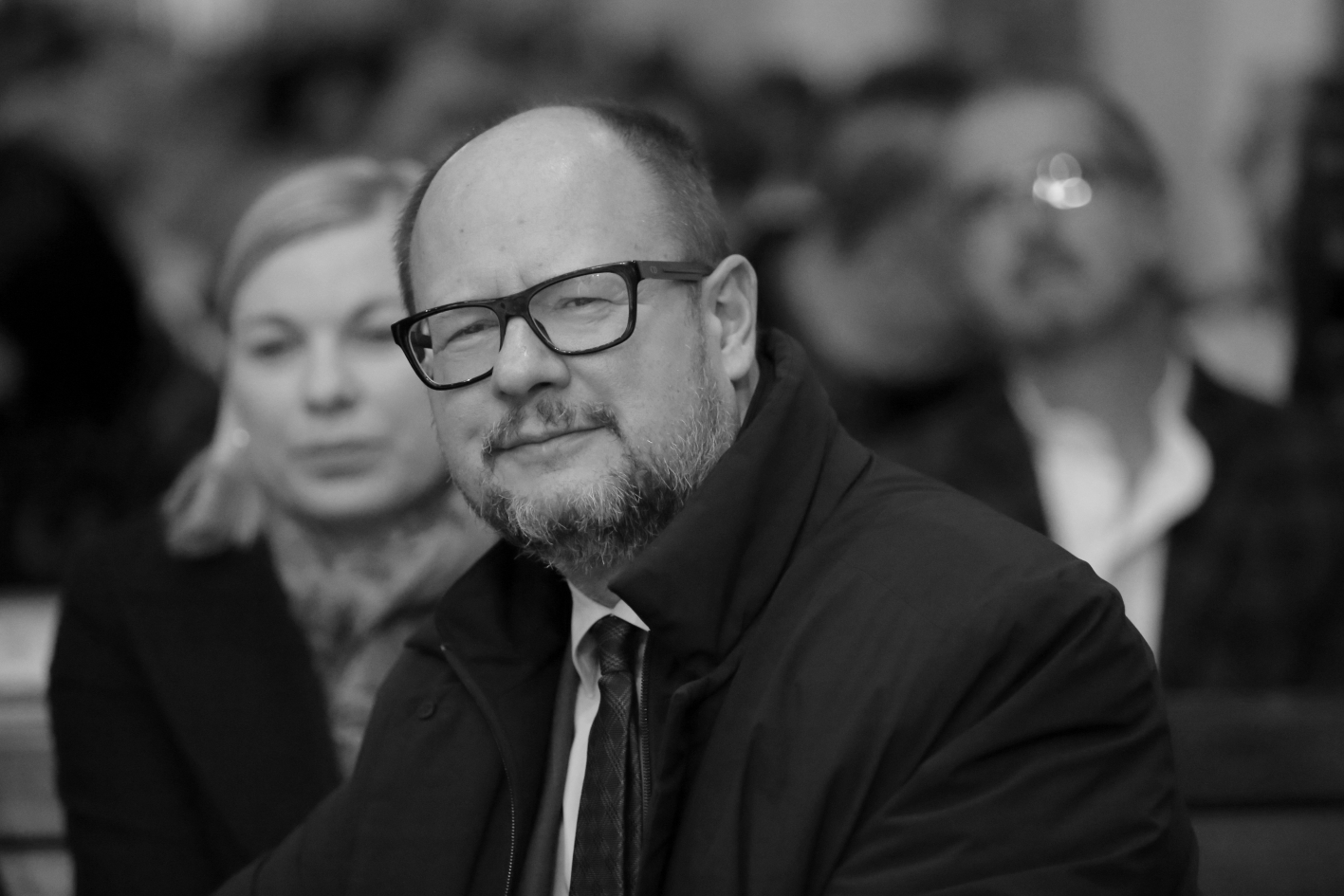
It is with deep regret and sadness that we learned the news of the tragic death of Gdańsk Mayor Paweł Adamowicz. We would like to thank him for his many years of help and support we received from him as the Mayor of the City of Gdańsk.
We would like to express our deepest condolences and sympathy to the Mayor’s family and friends.
Respectfully,
The management and staff of the Polish Chamber Choir.
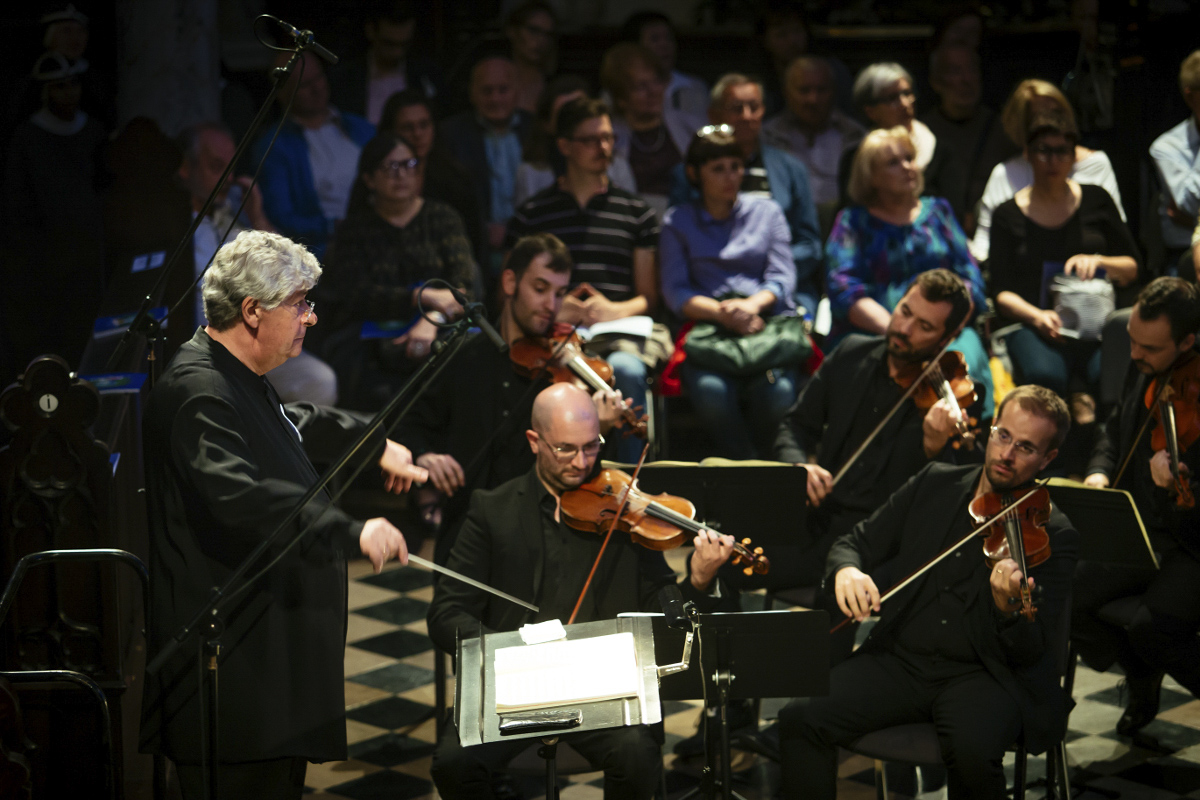
This is the final online concert from the Polish Chamber Choir’s Extraordinary Concerts.
Programme:
Henryk Mikołaj Górecki - Veni Sancte Spiritus op. 61
Wolfgang Amadeusz Mozart - Litaniae de verabili altaris sacramento KV 243
Artists:
Julia Leżniewa – soprano
Ewa Marciniec – alto
Krystian Krzeszowiak – tenor
Wojtek Gierlach – bass
Polski Chór Kameralny
Wenecka Orkiestra Barokowa
Jan Łukaszewski – conductor
Pentecost is a holiday that has deep roots in Polish culture. Next to Christmas and Easter, it is one of the few feasts that are celebrated over two days. We have prepared two pieces for this special occasion.
The first is Henryk Mikołaj Górecki’s hymn Come, Holy Spirit from 1988. This very special jewel of sacred choir music is yet another example of the composer’s exceptional ability to embellish simple, often traditional, melodies with uncommon harmony, full of sundry emotions and prayerful meditation.
The second piece is the Litania de venerabili altaris Sacramento (Litany of the Most Blessed Sacrament), K. 243. Tending to his duties at the Archbishop’s court, Mozart composed four litanies. The one selected for today’s concert, the final and most spectacular, comes from 1776. Its individual movements differ in their keys, performers, style and instrumentation. In the choral sections, the lush sound carries the listener away, while the solos captivate them with their spectacular coloratura and charming lyricism.
This is the final online concert we would like to invite you to. Slowly but surely, we are getting back to beautiful reality with the hope that we will soon get the opportunity to meet you live!
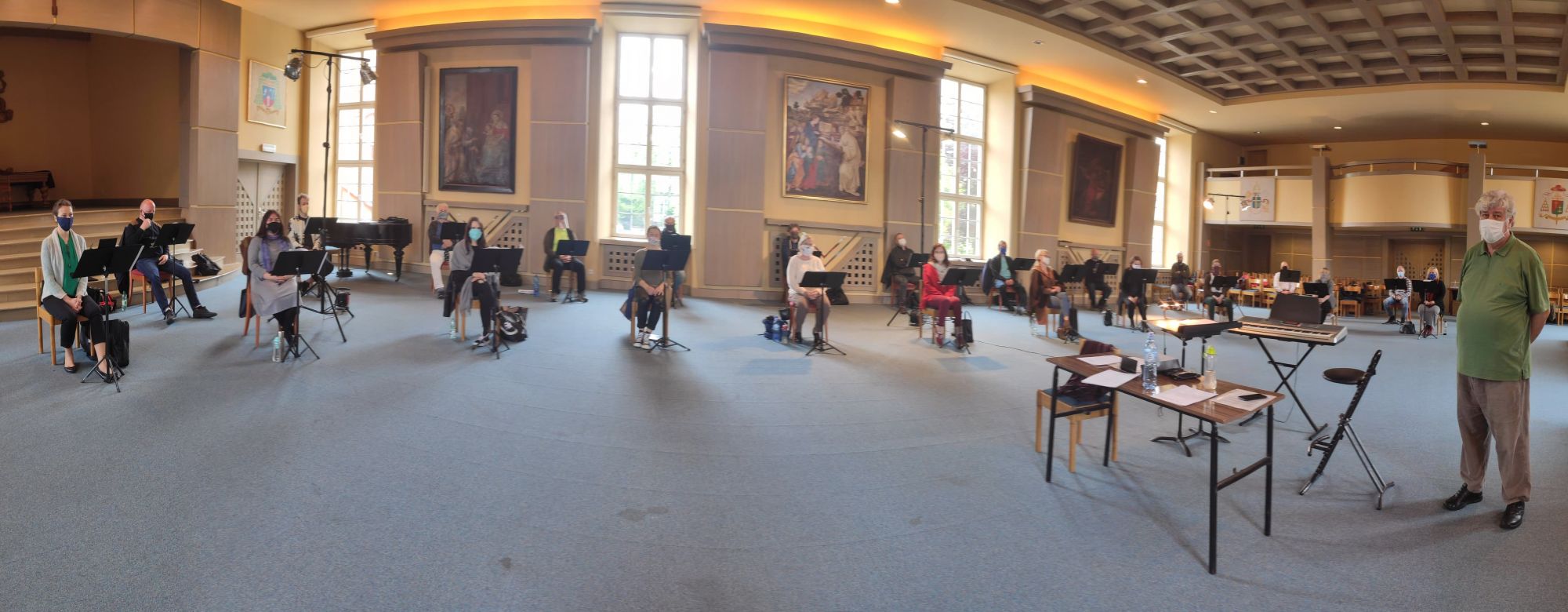
Dear Music Lovers!
We’ve got good news for you! We are getting back to work full of fervour and optimism We are working hard to prepare pieces by the winners of the Musica Sacra Nova International Composers Competition from 2010-2020, which we plan to record this July and release on a double album by the end of this extraordinary year 2020 The following video presents Beatus vir, a composition by Szymon Godziemba-Trytek / composer (the competition winner in 2016)
The composer himself described his piece thus:
“The lyrics refer to the virtue of wisdom. Its introduction is a distinct call by the male choir of the words “Beatus vir.” The call’s further repetition becomes a link that binds the composition together. In the placement set forth in the score, the choir is arranged in an untraditional topophonic way. This is in order to include the acoustic space in the musical activities and to correspond with the Renaissance polychoral technique."
The rehearsals are taking place at the spacious John Pall II Auditorium at Cystersów St. in Oliwa, courtesy of Gdańskiego Seminarium Duchownego - GSD, Miasto Gdańsk, Gdańsk Strefa Prestiżu